
Educators are increasingly turning to artificial intelligence to enhance learning experiences, create engaging content, and personalize education. However, effectively using AI-generated content requires understanding key practices to ensure educational impact and engagement.
With the right approach, AI tools can transform traditional teaching methods, making learning more interactive and tailored to individual needs. This article explores the best practices for leveraging AI in educational content creation, helping you to harness the full potential of AI in your classroom.
Understanding AI in Education
AI technology in education provides opportunities to automate content creation, personalize learning paths, and enhance student engagement. However, educators need to understand the capabilities and limitations of AI tools to use them effectively.
Before integrating AI into your teaching strategy, it's important to have a clear goal. Define what you want to achieve with AI: is it to save time, improve student engagement, or provide personalized learning experiences? Setting clear objectives will guide your use of AI tools.
For instance, Vexub offers AI-driven video creation tools that allow educators to quickly generate high-quality educational content. By leveraging such platforms, you can streamline content production and focus more on student interaction and feedback.
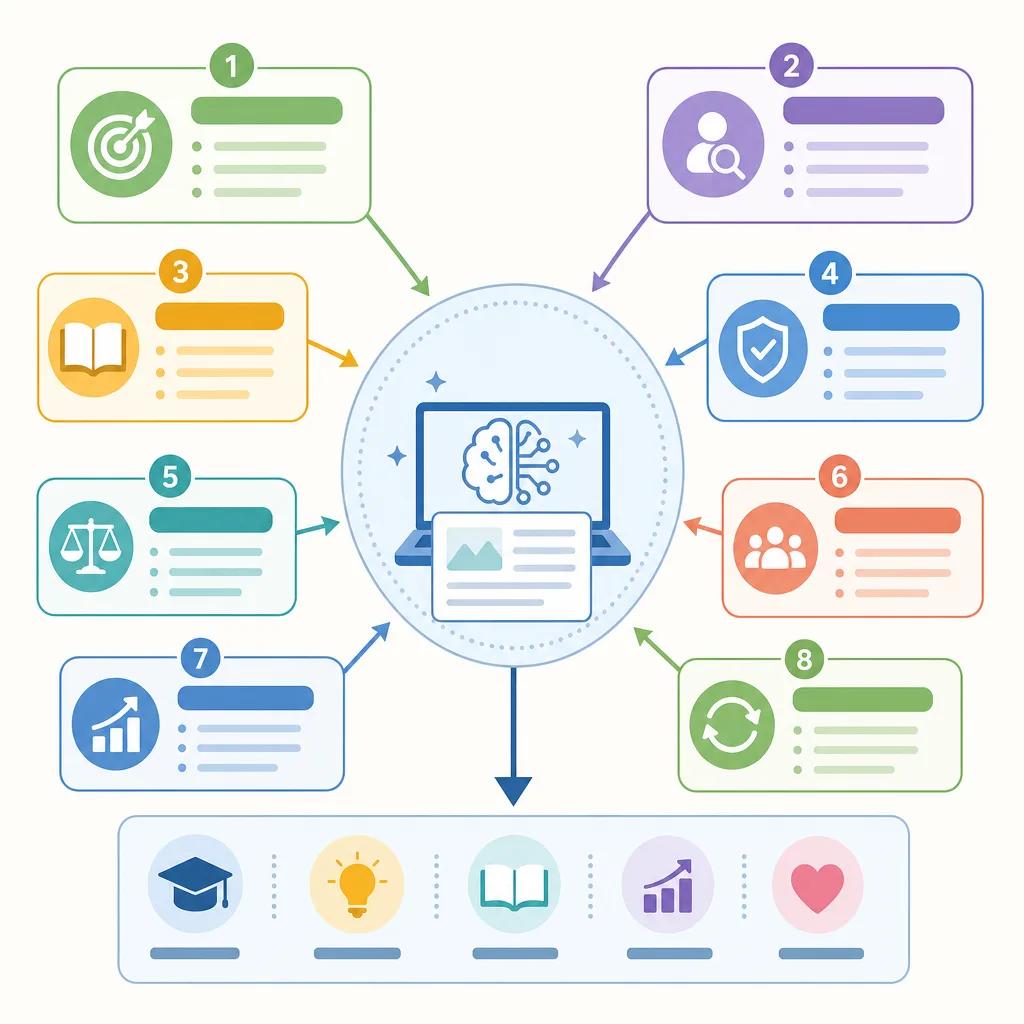
Creating Compelling AI-Generated Content
Compelling educational content is vital for effective teaching. AI-generated content should not only be informative but also engaging and accessible. Here are some best practices:
Ensure content accuracy: Always verify the information generated by AI tools to maintain educational integrity.
Use multimedia: Combine text, images, and videos to cater to different learning styles.
Incorporate interactivity: Use quizzes and interactive elements to keep students engaged.
Platforms like Vexub enable educators to integrate these elements seamlessly, offering tools that support a variety of multimedia formats. This diversity in content delivery can significantly enhance student learning experiences.
Maintaining Educational Quality
Quality should always be at the forefront when using AI to generate educational content. Educators should focus on the relevance, accuracy, and clarity of the content produced. It's essential to review and edit AI-generated content to ensure it aligns with educational standards.
Additionally, feedback from students can be invaluable. Encourage students to provide feedback on AI-generated materials, and use this input to refine and improve future content. By continuously improving your content, you maintain high educational standards and foster a more effective learning environment.
Consider using tools that offer analytics and insights, such as Vexub, to track student engagement and content performance. These insights can guide you in making data-driven decisions to optimize your teaching strategies.
Ethical Considerations and AI
While AI offers numerous benefits, ethical considerations are paramount. Educators must ensure that AI-generated content does not perpetuate biases or inaccuracies. It's important to apply a critical eye and scrutinize the outputs of AI tools.
Transparency with students about the use of AI in content creation can also build trust. Explain how AI is used in their learning process and encourage open discussions about its advantages and limitations.
Institutions should also consider privacy and data security when using AI tools. Ensure that the platforms you choose comply with data protection regulations to safeguard student information.
Create videos like this with AI
Script, voiceover, images and subtitles — automated in minutes.
Implementing AI Tools Effectively
Integrating AI tools into your educational framework requires careful planning. Start by selecting the right tools that suit your educational goals. Consider factors such as ease of use, compatibility with existing systems, and the level of support offered by the provider.
Training and support are crucial. Educators should receive adequate training on how to use AI tools effectively. Platforms like Vexub often provide resources and tutorials to help educators get the most out of their tools.
Collaborate with other educators to share insights and strategies on using AI in education. This collaborative approach can lead to innovative uses of AI technology, enriching the overall educational experience.

Conclusion: Future of AI in Education
The integration of AI in education is not just a trend but a transformative shift in how knowledge is delivered and consumed. By following best practices, educators can create engaging and effective educational content that maximizes the potential of AI.
Looking forward, the role of AI in education will continue to expand. As technology evolves, so too will the opportunities for creating personalized, interactive, and adaptive learning experiences. Embrace these advancements to stay at the forefront of educational innovation.
Explore more about leveraging AI in different contexts like link('AI video content for fitness coaches in 2026', '/blog/ai-video-fitness-coaches-2026') or learn link('how to repurpose blog posts into videos using AI', '/blog/how-to-repurpose-blog-posts-into-videos-ai'). For further insights into using AI tools, check out the link('Vexub affiliate program for passive income', '/blog/vexub-affiliate-program-passive-income').