
Educational videos transform learning experiences, bridging gaps by making complex topics understandable. With the rise of AI, educators now have powerful tools to craft dynamic, interactive tutorials that captivate and inform students like never before.
Imagine creating a tutorial that not only explains concepts clearly but also adapts to different learning styles. This is where AI video tools shine, offering educators the ability to personalize and enhance educational content effectively.
What Makes AI Video Tools Ideal for Educational Tutorials?
AI video tools bring several advantages to educational content creation. They allow for easy integration of multimedia elements, making lessons more engaging. Additionally, AI tools can automate time-consuming tasks, enabling educators to focus more on the quality of their content.
Moreover, AI can analyze viewer engagement and provide insights into how students interact with the material. This feedback loop allows for continuous improvement of educational videos, ensuring they meet the needs of learners.
Using platforms like Vexub, educators can leverage features such as automatic subtitling and voice cloning to make content more accessible. This not only broadens the reach of educational materials but also ensures compliance with diverse learning requirements.
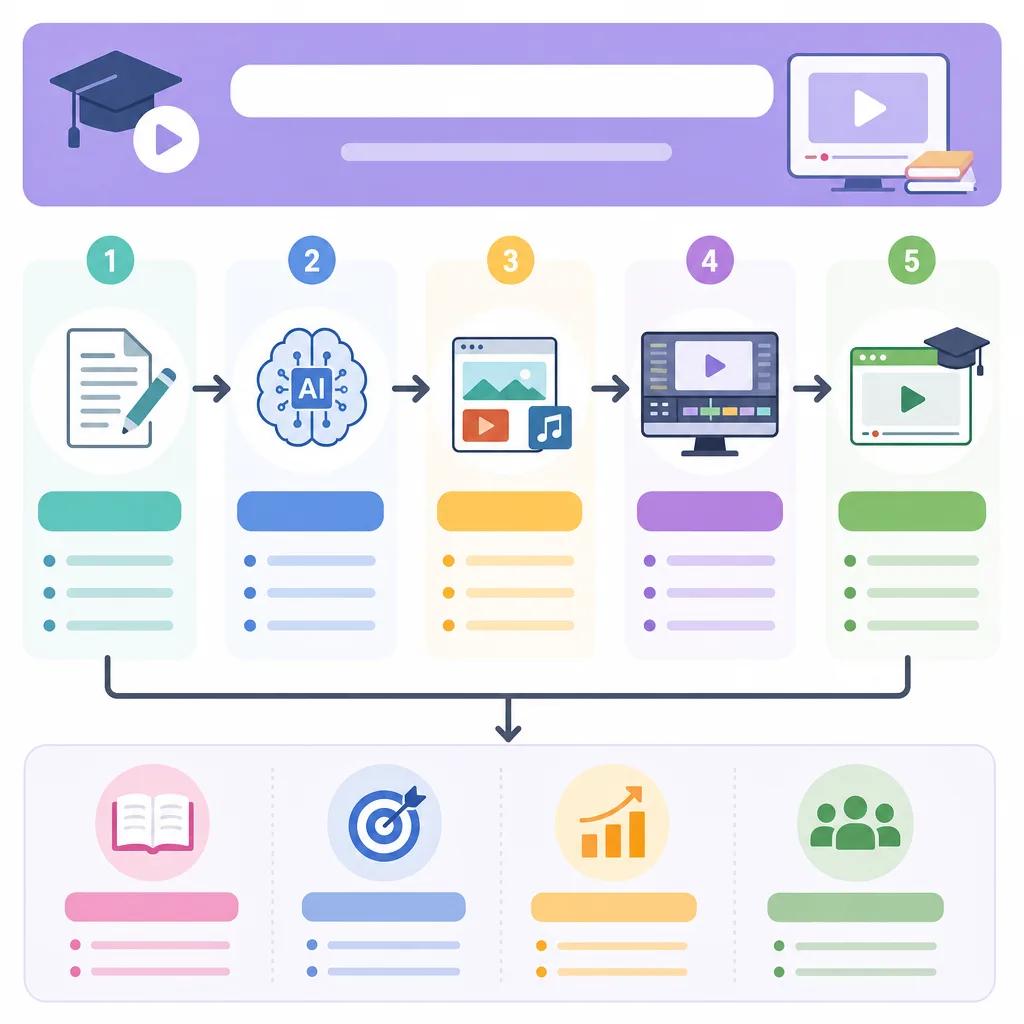
Steps to Create an Educational Tutorial Using AI
Step 1: Define Your Learning Objectives
Before diving into video creation, outline the specific learning objectives you aim to achieve. This clarity helps in structuring your content effectively. Consider what knowledge or skills your audience should gain by the end of the tutorial.
Step 2: Script and Storyboard
Develop a detailed script and storyboard. This step ensures a coherent flow and helps visualize how the final video will look. Use AI tools to generate scripts or refine existing ones, saving time and maintaining quality.
For example, you can use AI to suggest improvements in language or structure, ensuring that your content is both engaging and educational. Platforms like Vexub offer script enhancement features that can automate this process.
Integrating Visuals and Interactivity
Visual elements are crucial for maintaining engagement. AI tools can assist in generating graphics or animations that complement your educational content. This not only makes the tutorial visually appealing but also aids in the retention of information.
Interactive elements, such as quizzes or polls, can be incorporated using AI platforms to actively involve students in the learning process. These tools can provide instant feedback, helping students assess their understanding in real-time.
Consider linking interactive elements that encourage engagement, such as link('ai-video-content-educational-platforms', '/blog/ai-video-content-educational-platforms'), which discusses the benefits of interactive video content in education.
Evaluating and Refining Your Tutorial
Once your video is complete, use AI analytics to gauge its effectiveness. Look at metrics such as view time, engagement rates, and audience feedback. These insights are invaluable for refining content and improving future tutorials.
Platforms like Vexub provide comprehensive analytics dashboards that help educators understand their audience better. This data-driven approach ensures that educational videos remain relevant and impactful.
Additionally, feedback from students can be integrated into the refinement process, ensuring that tutorials are continuously improved and tailored to meet the evolving needs of learners.
Create videos like this with AI
Script, voiceover, images and subtitles — automated in minutes.
Case Study: Successful Educational Tutorials Using AI
Consider the case of an online course platform that integrated AI video tools to revamp its educational content. By using AI, the platform was able to cut production time by 50% while increasing student engagement by 30%.
The key to their success was leveraging AI for both content creation and feedback analysis. This allowed them to create personalized learning experiences that resonated with a diverse student base.
For more on how AI can transform educational content, check out link('ai-video-generation-online-courses', '/blog/ai-video-generation-online-courses'), which explores different applications of AI in course creation.

Future Trends in AI-Enhanced Educational Videos
The future of educational videos is bright with the integration of AI. As technology advances, we can expect even more sophisticated tools that offer deeper personalization and enhanced learning analytics.
Emerging trends include the use of AI for real-time language translation, making educational content accessible globally. Additionally, AI-generated simulations and virtual reality experiences are set to revolutionize how educational content is delivered.
Vexub continues to stay at the forefront of these trends, offering educators cutting-edge tools to enhance their teaching methods. By embracing AI, educators can ensure they are providing the best possible learning experiences for their students.
Conclusion: Embrace AI for Effective Tutorial Creation
Incorporating AI into educational tutorial creation is not just beneficial but essential for staying relevant in today's fast-paced learning environment. With AI tools, educators can create high-quality, engaging content efficiently.
Platforms like Vexub empower educators to craft tutorials that not only educate but also inspire. By leveraging AI, you can transform your teaching methods and offer your students a richer, more interactive learning experience.
Discover more ways to enhance your educational content by exploring link('correct-subtitles-in-vexub', '/blog/correct-subtitles-in-vexub'), where you'll find tips on optimizing video accessibility through accurate subtitling.