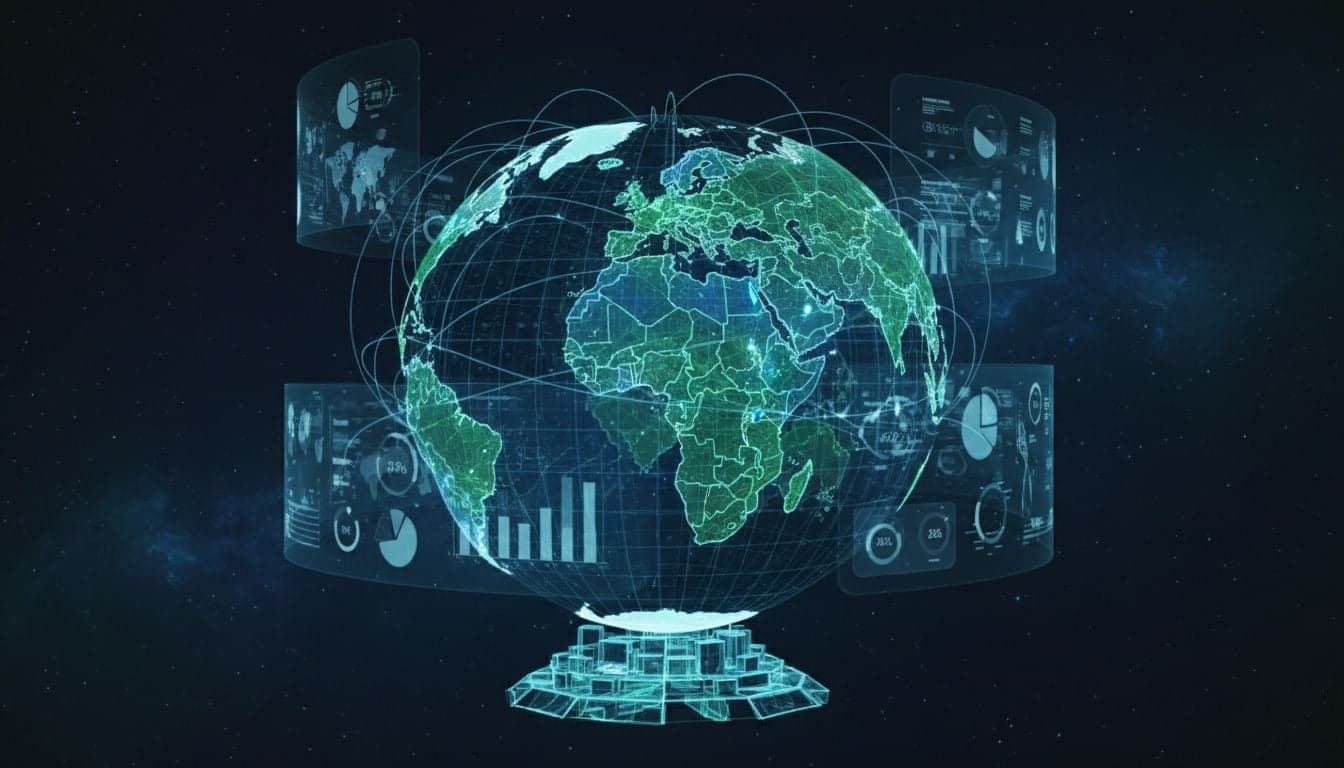
Geography content dominates YouTube with channels earning $10,000-$50,000 monthly from educational map videos. RealLifeLore generates over 2 million views per video discussing territorial disputes, while Geography Now! has built 3.2 million subscribers explaining every country on Earth. The demand for geography facts remains constant because viewers crave knowledge about the world around them.
AI technology transforms how creators produce geography content. You can generate professional satellite imagery, animated maps, and data visualizations without expensive software or geographic expertise. Channels launched in 2025 using AI-generated maps reached monetization in 45-60 days by publishing consistent geography facts content.
This guide shows you how to build a faceless geography YouTube channel using AI-generated maps, satellite views, and educational narration. You'll learn the proven content formats, research methods, and production workflows that successful geography creators use to generate millions of views.
Why Geography Channels Succeed on YouTube
Geography content attracts dedicated audiences who watch longer and engage more than entertainment content. The average watch time for geography videos exceeds 8 minutes, compared to 3-4 minutes for typical YouTube content. This extended engagement signals quality to YouTube's algorithm, pushing your videos to more viewers.
The niche offers multiple revenue streams beyond AdSense. Geography channels monetize through:
Premium educational content: Patreon supporters pay $5-$50 monthly for detailed maps and analysis.
Affiliate partnerships: Atlas subscriptions, travel gear, and educational resources generate commissions.
Sponsorships: Geography software companies, VPN services, and educational platforms pay $500-$5,000 per integration.
Merchandise: Custom maps, globes, and educational posters sell consistently to geography enthusiasts.
The faceless YouTube format works perfectly for geography content because viewers focus on maps and data rather than personalities. You compete on information quality and presentation rather than camera presence or production value.
Profitable Geography Content Formats
Successful geography channels use specific content formats that consistently generate views and engagement. These formats combine education with entertainment, making complex geographic concepts accessible to general audiences.
Country Comparison Videos
Country comparison content generates 500,000-3 million views per video by satisfying viewer curiosity about national differences. Compare GDP, population density, military strength, natural resources, or cultural metrics between nations. Videos like "Why is Norway So Rich?" or "USA vs China: Geographic Advantages" attract viewers from both countries plus international audiences.
AI tools generate comparison graphics showing side-by-side statistics, animated bar charts, and geographic overlays. Vexub creates these visualizations from simple text prompts describing the data you want to display, eliminating manual graphic design work.
Border Dispute Explanations
Territorial conflict videos attract engaged audiences seeking to understand current events. Explain the Kashmir dispute, South China Sea tensions, or Arctic territorial claims using animated maps showing historical border changes. These videos generate comments, shares, and extended watch times as viewers debate the issues.
Create animated sequences showing how borders evolved over decades using AI-generated historical maps. Highlight disputed territories, territorial waters, and exclusive economic zones with color-coded overlays that make complex situations immediately understandable.
Geographic Anomaly Deep Dives
Unusual geographic features fascinate viewers and generate viral potential. Explore topics like:
Why does Bangladesh have land inside India and vice versa?
How did four countries meet at a single point in Africa?
Why does one timezone curve through multiple countries?
What makes the Korean DMZ the most militarized border on Earth?
These videos attract curious viewers who share surprising geographic facts with friends, driving organic growth through social media sharing.
Natural Disaster Analysis
Videos explaining earthquake zones, volcanic activity, tsunami risks, and climate patterns generate consistent views as viewers seek to understand natural phenomena. Create content analyzing why California faces earthquake risks, how the Ring of Fire formed, or which cities face the greatest flood danger.
AI generates satellite imagery showing fault lines, tectonic plate movements, and topographic features that explain disaster patterns. Combine these visuals with data showing historical disaster frequency and projected future risks.
Create videos like this with AI
Script, voiceover, images and subtitles — automated in minutes.
Research Methods for Geography Content
Quality geography content requires accurate data and credible sources. Successful creators develop research systems that provide reliable information while maintaining production efficiency.
Authoritative Data Sources
Build your content from verified geographic databases and official statistics:
World Bank Data: Economic statistics, population data, and development indicators for every country.
CIA World Factbook: Comprehensive country profiles with verified geographic, demographic, and economic data.
Natural Earth: Free vector and raster map data at multiple scales for creating custom visualizations.
USGS Resources: Satellite imagery, topographic data, and natural disaster information.
United Nations Statistics: Population projections, migration data, and global development metrics.
Cross-reference data across multiple sources before including statistics in videos. Cite sources in video descriptions to build credibility and satisfy curious viewers seeking additional information.
Current Events Integration
Connect geography content to trending news topics to boost discovery. When natural disasters occur, territorial disputes escalate, or international conflicts arise, create timely videos explaining the geographic context. These videos attract search traffic from viewers seeking to understand breaking news.
Monitor news aggregators, geography subreddits, and international relations forums to identify trending geographic topics. Create content within 24-48 hours of major events to capture search traffic before larger channels publish comprehensive coverage.
Creating AI-Generated Map Visuals
Professional map visualizations differentiate successful geography channels from amateur content. AI tools generate publication-quality maps, satellite views, and data visualizations that match or exceed professionally designed graphics.
Map Generation Workflow
Vexub creates custom maps from text descriptions of the geographic features you want to highlight. Describe the region, features to emphasize, color scheme, and labeling style. The AI generates maps showing:
Political boundaries with customizable colors for different countries or regions
Topographic features highlighting elevation changes, mountain ranges, and water bodies
Population density gradients showing urban concentration and rural areas
Resource distribution indicating oil fields, mineral deposits, or agricultural zones
Transportation networks displaying roads, railways, and shipping routes
Generate multiple map variations showing different aspects of the same region. Create a base political map, then overlay economic zones, natural resources, or climate patterns to build a comprehensive geographic picture.
Satellite Imagery Integration
AI generates realistic satellite views showing cities, landscapes, and geographic features from orbital perspective. Use these images to illustrate urban sprawl, deforestation, agricultural patterns, or coastal development. Satellite views provide concrete visual evidence supporting your geographic analysis.
Create before-and-after comparisons showing how regions changed over decades. Generate satellite imagery depicting historical landscapes, then create modern views showing urban development, environmental change, or infrastructure growth.
Animated Map Sequences
Animation brings static maps to life by showing changes over time. Create sequences displaying:
Border changes through historical periods showing territorial expansion or contraction
Population migration patterns with animated flows between regions
Climate zone shifts illustrating long-term environmental change
Economic development spreading from urban centers to rural areas
Military conflict progression showing battle lines and territorial control
Vexub generates these animations from scripts describing the sequence of changes you want to display. The AI handles transitions, timing, and visual consistency across the animated sequence.
Scripting Educational Geography Content
Strong scripts balance educational content with entertainment value. Geography videos educate viewers while maintaining engagement through storytelling, surprising facts, and clear explanations of complex concepts.
Hook Formula for Geography Videos
Open videos with surprising statistics or provocative questions that immediately capture attention:
"This border exists because of a mapping error 200 years ago"
"Five countries control 90% of Earth's freshwater resources"
"One city sits in two continents simultaneously"
"This island switches between two countries twice per year"
Follow the hook with context explaining why the topic matters. Connect geographic facts to current events, economic implications, or cultural significance that resonates with general audiences.
Explanation Structure
Break complex geographic concepts into digestible segments:
State the phenomenon: Clearly describe the geographic feature or pattern you're explaining.
Provide historical context: Explain how the situation developed over time through historical events.
Analyze current implications: Discuss how the geography affects modern politics, economics, or culture.
Project future scenarios: Explore how the situation might evolve based on current trends.
Use analogies and comparisons to make unfamiliar concepts relatable. Compare the size of countries to familiar regions, describe populations using city equivalents, or relate geographic features to well-known landmarks.
Data Visualization in Scripts
Reference specific statistics while showing corresponding visualizations. Script lines like "China's population density reaches 3,500 people per square mile in coastal provinces" while displaying a population density map showing the concentration. This synchronized approach reinforces information through multiple channels.
Limit data points to 3-5 key statistics per minute of content. Too many numbers overwhelm viewers, while too few fail to support your educational claims. Select the most impactful statistics that clearly illustrate your central argument.
Voice and Audio Production
Professional narration elevates geography content from amateur to authoritative. The right voice conveys expertise and confidence, making viewers trust your geographic analysis and return for future content.
AI voice generators produce natural-sounding narration with appropriate pacing for educational content. Choose voices with clear pronunciation, moderate speaking speed, and professional tone. Test multiple AI voices with identical scripts to identify which voice best matches your channel's educational style.
The AI voiceover guide covers voice selection, pacing adjustments, and emotional inflection for different content types. Apply these techniques to geography narration, emphasizing key facts and maintaining energy through longer explanations.
Background music supports rather than dominates geography content. Select instrumental tracks with subtle rhythms that maintain viewer attention without distracting from narration. Avoid dramatic music unless covering conflicts or disasters where emotional tone enhances the content.
Publishing Strategy for Geography Channels
Consistent publishing builds audience expectations and signals channel activity to YouTube's algorithm. Successful geography channels publish 2-3 videos weekly, maintaining quality while providing regular content that keeps viewers returning.
Content Calendar Planning
Plan content mixing evergreen topics with timely geographic analysis. Allocate 70% of videos to evergreen topics like country comparisons, natural features, or historical borders that generate views indefinitely. Reserve 30% for timely content responding to current events, natural disasters, or geopolitical developments.
Batch produce similar content types to maximize efficiency. Create 4-6 country comparison videos in one production session, 3-4 natural disaster analyses in another. This approach maintains consistent visual style while reducing setup time between videos.
Title and Thumbnail Optimization
Geography titles balance education with curiosity. Effective formulas include:
"Why [Country] is [Surprising Characteristic]" - "Why Finland is Impossible to Invade"
"The [Geographic Feature] That [Unexpected Consequence]" - "The Border That Creates Two Time Zones in One City"
"[Number] Reasons [Geographic Pattern]" - "7 Reasons Norway Dominates Oil Production"
"How [Event] Changed [Region] Forever" - "How One Treaty Split Korea Into Two Nations"
Thumbnails show the primary map or satellite image with bold text highlighting the key fact or question. Use high contrast colors distinguishing different countries, regions, or features. Include arrows, circles, or highlights drawing attention to the specific geographic element discussed in the video.
Series Development
Series create binge-watching opportunities and encourage subscription. Develop ongoing series like:
"Country vs Country" comparing pairs of nations weekly
"Border Stories" exploring unusual international boundaries
"Geographic Superlatives" covering the largest, smallest, deepest, highest geographic features
"Natural Disaster Zones" analyzing regions vulnerable to specific hazards
Link series videos in cards, end screens, and descriptions to guide viewers through related content. Playlists organized by series help new viewers discover your comprehensive coverage of specific geographic topics.
Monetization Timeline and Growth Expectations
Geography channels reach YouTube Partner Program requirements faster than entertainment content due to longer watch times and engaged audiences. Channels publishing 3 videos weekly typically achieve 1,000 subscribers and 4,000 watch hours within 60-90 days.
Initial AdSense revenue ranges from $3-$8 per 1,000 views depending on viewer geography and topic relevance to advertiser interests. Videos covering economic topics, technology, or business-related geography attract higher CPMs than pure natural geography content.
Supplement AdSense income with affiliate partnerships promoting geography resources, educational subscriptions, and travel planning tools. Educational audiences convert well on quality products that enhance their geographic knowledge or support their own content creation.
Join the world facts YouTube guide to explore related educational content formats that complement geography videos. Diversifying into interconnected educational niches builds a broader content ecosystem while maintaining topical relevance.
Geography content provides sustainable long-term growth through evergreen topics that generate views for years after publication. Videos explaining fundamental geographic concepts, country profiles, or natural features continue attracting new viewers discovering your channel through search and recommendations.