Crafting captivating AI videos is only part of the journey. To truly maximize your engagement, understanding how to A/B test your video content is essential. A/B testing, especially for AI-generated videos, allows creators to determine which elements captivate their audience most effectively.
By exploring variables such as thumbnails, hooks, titles, and video formats, you can optimize your AI video performance and achieve higher view counts and engagement rates. This guide will walk you through the comprehensive steps to successfully A/B test your video content.
Embrace the power of data-driven decisions to fine-tune your video strategy. Let's dive into the nuances of A/B testing for AI videos and uncover actionable strategies to enhance your content's performance.
What is A/B Testing for AI Videos?
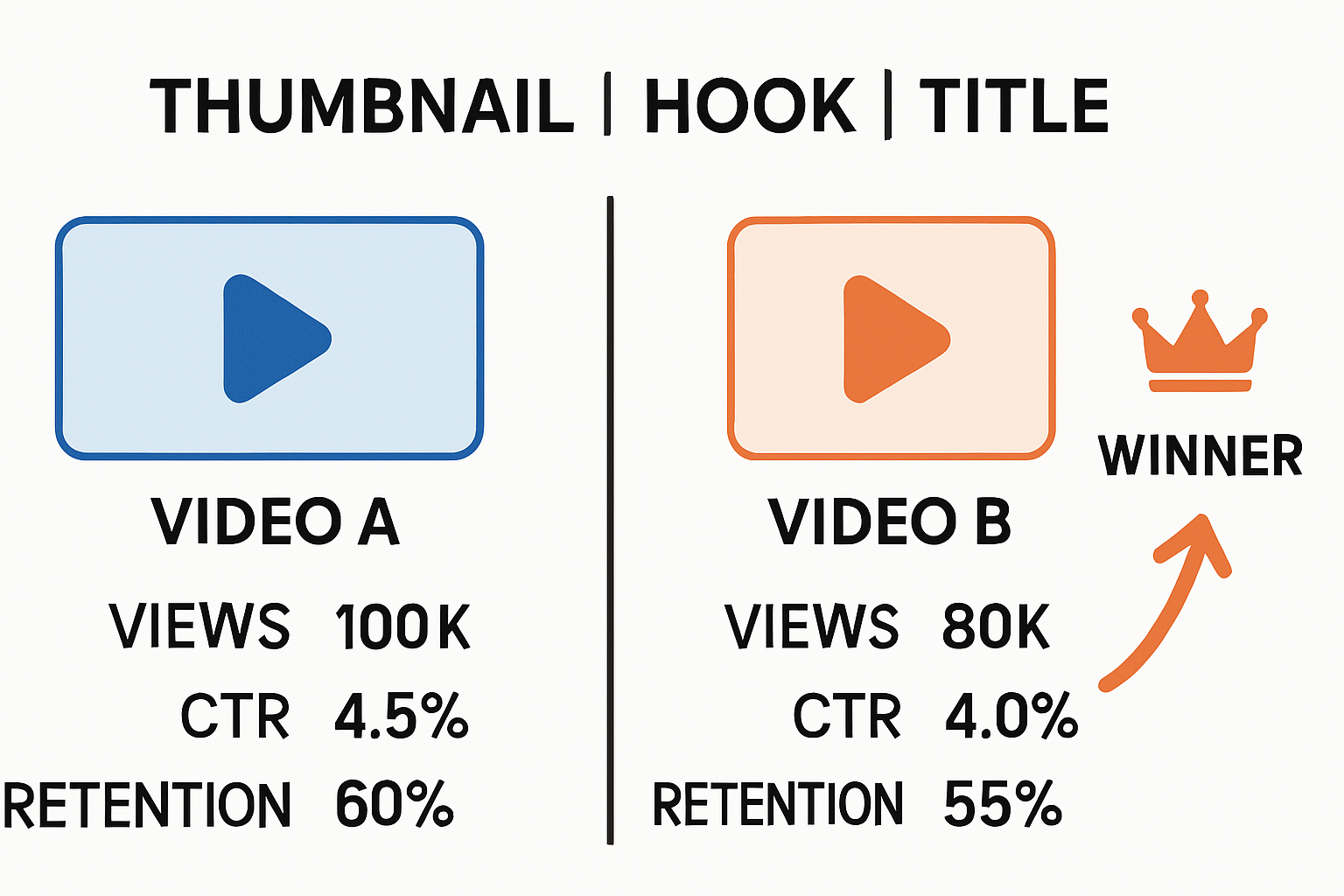
A/B testing, or split testing, is a method where you compare two versions of a video to see which one performs better. This could involve changing a thumbnail, altering the hook, or modifying the title. By analyzing viewer interaction, you can identify what resonates with your audience. For instance, if one thumbnail garners 30% more clicks than another, it's clear which one to use moving forward.
Key Elements to A/B Test
When A/B testing AI videos, focus on these critical elements:
Thumbnails: The visual first impression matters.
Hooks: The opening seconds that capture viewer attention.
Titles: The words that draw viewers in and influence click-through rates.
Formats: Different styles, such as shorts, long-form, and live videos.
A/B Testing Your Thumbnail
Your thumbnail serves as the first point of interaction with potential viewers. A/B testing thumbnails involves creating two different designs and seeing which garners more clicks.
Tips for Effective Thumbnails
Use contrasting colors to catch the eye.
Incorporate bold text with a clear message.
Include expressive faces to convey emotion.
Testing Hooks and Titles
The hook and title play a significant role in viewer retention. A strong hook keeps viewers watching past the first few seconds.
Crafting Compelling Hooks
Your hook should be intriguing. Consider beginning with a question or an astonishing fact that makes viewers curious.
Optimizing Titles
Titles should be descriptive yet compelling, containing keywords that improve searchability. Experiment with different phrasings to see which attracts more viewers.
Formats Matter: Testing Different Styles
Explore various video formats to understand what works best for your audience. For example, some viewers prefer animated AI videos, while others may favor live-action styles.
Create videos like this with AI
Script, voiceover, images and subtitles — automated in minutes.
Analyzing Your Results
Once you have gathered enough data from your A/B tests, it's time to analyze the results. Look for significant patterns in viewer interaction. Use metrics like watch time, click-through rates, and shares to gauge performance.
Important Metrics to Monitor
Click-Through Rate (CTR): How many viewers clicked on your video compared to those who saw the thumbnail.
Average View Duration: How long viewers watched before clicking away.
Engagement Rate: Comments, likes, and shares generated by the video.
Implementing Changes Based on Findings
After analyzing the A/B test results, implement the successful elements into your future video content strategy. Adjustments based on solid data can lead to substantial improvements in overall engagement.
Conclusion: Transforming Insights into Action
A/B testing AI videos is a powerful way to optimize your content, ensuring each video resonates with your audience. By focusing on key elements and using data-driven insights, you can maximize your view counts and engagement. For deeper insights into analyzing video performance, read our guide on AI Video Analytics Metrics.
Start implementing these strategies today and watch your AI videos flourish! If you want to learn more about specific elements like thumbnails and titles, check out this article for additional tips.