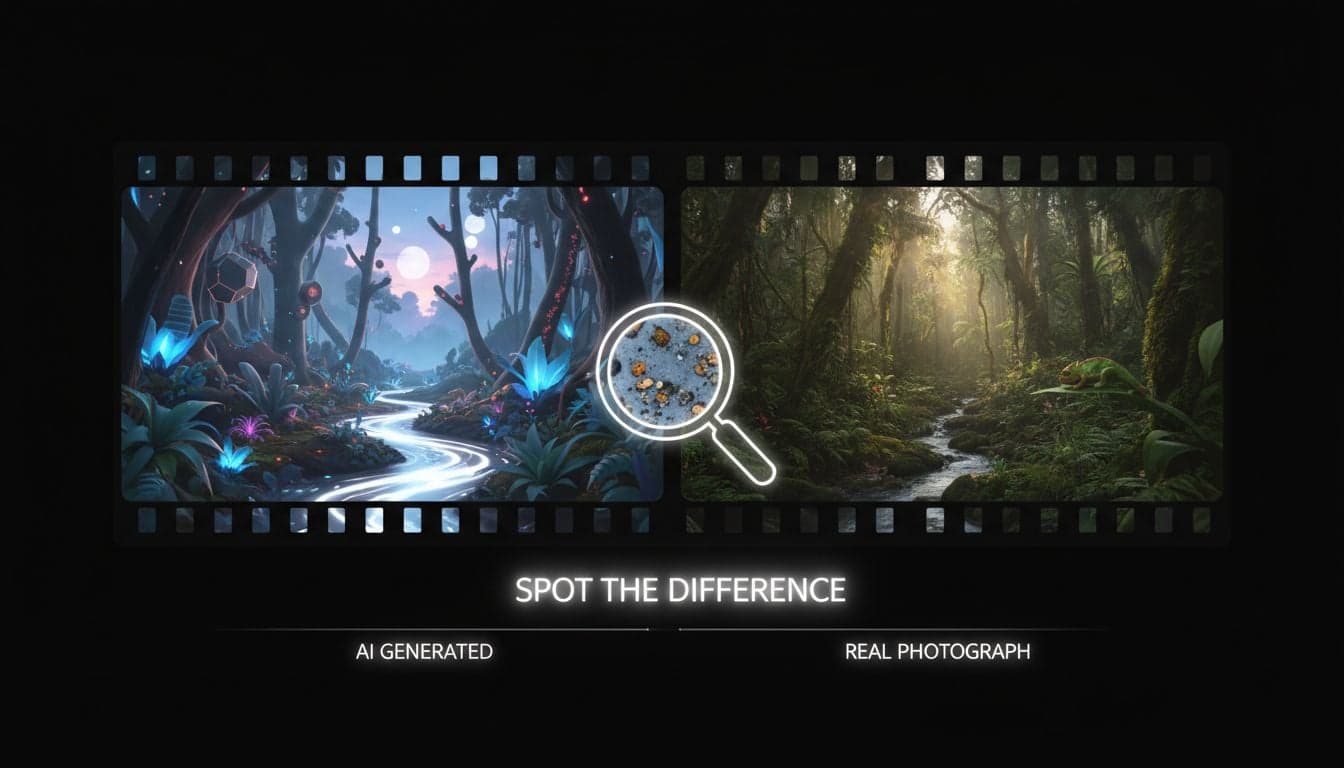
AI video generators have reached a tipping point. The latest models produce footage that blurs the line between generated and real, challenging even experienced videographers to spot the difference. Understanding these quality benchmarks matters whether you're creating content or simply consuming it.
This analysis examines current AI video quality standards, reveals reliable detection methods, and provides actionable techniques to maximize realism in your AI-generated content.
The Current State of AI Video Quality
AI video generation has progressed dramatically since 2024. Modern systems like Google's Veo 3 and OpenAI's Sora demonstrate capabilities that seemed impossible just two years ago: consistent physics, coherent motion, and surprisingly accurate detail rendering.
Key quality indicators separate premium AI video from basic outputs:
Temporal consistency: Objects maintain their appearance across frames without morphing or disappearing.
Motion physics: Movement follows natural laws rather than floating or gliding unrealistically.
Lighting coherence: Shadows and highlights respond correctly to scene changes and camera movement.
Detail preservation: Fine textures like hair, fabric, and skin maintain structure at 1080p and beyond.
Edge accuracy: Boundaries between objects remain sharp without blur or artificial smoothing.
Top-tier AI video generators now handle these elements reliably for 5-10 second clips. Real-world footage still dominates for extended sequences, fast action, and complex interactions between multiple subjects.
Telltale Signs of AI-Generated Video
Despite remarkable progress, AI video exhibits characteristic artifacts that reveal its synthetic origin. Recognizing these patterns helps creators identify areas for improvement and helps viewers develop critical media literacy.
Visual Artifacts to Watch For
Hand anomalies: Fingers that blend together, extra digits, or unnatural joint angles remain the most reliable AI detector. Hands often appear blurred or positioned awkwardly.
Background inconsistencies: Elements in the background may shift position between frames or display impossible geometry. Watch for buildings that change shape or objects that phase through surfaces.
Text rendering failures: AI struggles with readable text. Letters appear garbled, backwards, or morph into abstract symbols. Signs, labels, and documents rarely display coherent words.
Uncanny facial expressions: Micro-expressions sometimes lag behind emotions, creating a subtle disconnect. Eyes may not quite track correctly or blinks occur at unnatural intervals.
Repetitive patterns: AI models favor certain visual motifs, leading to suspiciously similar compositions across different generated videos.
Motion and Physics Tells
Movement analysis reveals AI generation more reliably than static frame examination:
Objects accelerate or decelerate without visible force application
Water, smoke, or fabric flows with incorrect weight or viscosity
Camera movements feel mathematically perfect rather than showing natural operator shake
Reflections and shadows occasionally lag behind the objects casting them
Collision interactions between objects lack proper impact response
Create videos like this with AI
Script, voiceover, images and subtitles — automated in minutes.
Quality Comparison: AI vs Real Footage
Direct comparison reveals where AI video excels and where real footage maintains clear advantages. Understanding these distinctions helps creators choose the right approach for specific content needs.
Where AI Video Competes
AI-generated video matches or exceeds real footage quality in several scenarios:
Controlled environments: Studio-like settings with simple backgrounds and minimal movement showcase AI's strengths. Product demonstrations and talking-head interviews work particularly well.
Stylized content: Abstract visuals, motion graphics, and artistic interpretations benefit from AI's creative flexibility. Viewers expect less photorealism, reducing scrutiny.
Concept visualization: Scenarios impossible to film practically—historical recreations, fantasy sequences, or scientific visualizations—become accessible through AI generation.
Cost efficiency: Producing professional-looking footage without cameras, crew, locations, or actors provides massive budget advantages.
Where Real Footage Dominates
Traditional filming retains decisive advantages for specific content types:
Extended sequences beyond 15-20 seconds maintain consistent quality
Fast action with rapid camera movements and multiple subjects
Complex human interactions requiring nuanced emotional authenticity
Detailed close-ups of hands, faces, and intricate objects
Dynamic lighting conditions and unpredictable environmental elements
Legal requirements for authentic documentation or testimonials
Smart creators combine both approaches, using AI for certain elements while filming critical moments that demand absolute realism.
Improving AI Video Realism
Maximizing AI video quality requires understanding system limitations and working within optimal parameters. These techniques consistently produce more convincing results.
Prompt Engineering for Quality
Detailed, specific prompts generate higher-quality output than vague descriptions:
Specify camera type, lens focal length, and shooting style: "Shot on RED Komodo 6K, 35mm lens, shallow depth of field"
Define lighting conditions precisely: "Golden hour sunlight, soft shadows, natural bounce light from white walls"
Include reference to real cinematography: "Cinematic composition inspired by Roger Deakins, warm color grade"
Describe motion explicitly: "Slow dolly push toward subject, smooth gimbal movement"
Set resolution expectations: "4K resolution, high detail, film grain texture"
Technical Optimization Strategies
Keep sequences short: Generate 3-5 second clips rather than longer sequences. Quality degrades significantly after 10 seconds in most systems.
Avoid difficult elements: Minimize hands in frame, skip complex text, and reduce the number of people in scenes until AI improves these weak points.
Emphasize environmental context: Strong background details and atmospheric elements distract from subtle imperfections in primary subjects.
Use appropriate movement speed: Medium-paced motion works best. Ultra-slow or very fast movement amplifies physics errors.
Generate multiple variations: Create 5-10 versions of each shot and select the best. Quality varies significantly between generations from identical prompts.
Vexub's AI video system incorporates these optimization principles automatically, analyzing prompts to suggest improvements and generating multiple variations for selection.
Post-Generation Enhancement
Strategic editing elevates AI video quality significantly:
Color grading adds cinematic polish and masks minor inconsistencies
Motion blur applied in post-production smooths unrealistic movement
Grain and texture overlays increase perceived authenticity
Strategic cuts hide problematic frames or transitions
Audio design draws attention away from visual imperfections
The Detection Arms Race
As AI video quality improves, detection methods evolve in parallel. Forensic analysis now examines compression artifacts, pixel-level patterns, and statistical anomalies invisible to human observers.
Automated detection tools analyze:
Noise patterns: Real cameras produce characteristic sensor noise; AI generates mathematically different patterns.
Compression signatures: Authentic footage shows codec-specific artifacts; AI output displays generation-specific markers.
Metadata analysis: Camera EXIF data, recording parameters, and file creation timestamps reveal generation rather than capture.
Frame correlation: Statistical relationships between consecutive frames differ between recorded and generated video.
However, these technical approaches lag behind cutting-edge AI systems by 6-12 months. The most reliable detection combines automated analysis with human expertise examining context, content coherence, and subtle quality indicators.
Ethical Considerations and Disclosure
The increasing difficulty of distinguishing AI from real video creates ethical obligations for content creators. Transparency builds audience trust and prevents misinformation spread.
Best practices include:
Clearly label AI-generated content in descriptions and captions
Avoid using AI video to misrepresent real events or people
Disclose AI use when context or audience expectations assume real footage
Consider platform requirements for synthetic media labeling
Maintain higher standards for news, educational, or documentary content
Vexub recommends transparent AI use, enabling creators to produce engaging content while maintaining audience trust through honest disclosure practices.
Future Quality Projections
AI video quality improvements accelerate monthly. Current trajectories suggest several developments through 2027:
Extended duration: Reliable generation of 30-60 second sequences with maintained consistency.
Hand accuracy: Correct finger count, natural positioning, and realistic movement in hand-focused shots.
Text rendering: Readable signs, documents, and on-screen text generation.
Complex physics: Accurate fluid dynamics, cloth simulation, and multi-object interactions.
Emotional authenticity: Subtle facial expressions and body language matching emotional context.
These advancements will make detection increasingly difficult, placing greater emphasis on metadata authentication and ethical disclosure. Creators who master AI video techniques now position themselves to leverage even more powerful tools as they emerge.
Practical Detection Exercise
Develop your AI detection skills through deliberate practice:
Watch 10 short videos daily without knowing their source (AI or real)
Note specific elements that seem suspicious or unusual
Verify the source and analyze which cues were accurate indicators
Pay special attention to hands, backgrounds, text, and physics
Track your accuracy rate over time to measure improvement
This practice builds intuition for subtle quality differences that separate current AI video from authentic footage, valuable whether you're creating or analyzing content.
Making the Choice: AI, Real, or Hybrid
The AI versus real decision depends on specific project requirements, budget constraints, and quality expectations. Most professional creators adopt hybrid workflows, using AI for cost-effective elements while filming critical sequences that demand perfect realism.
AI video excels for rapid iteration, concept testing, and producing volume content cost-effectively. Real footage remains essential for flagship content, legal documentation, and scenarios requiring unquestionable authenticity. The most successful creators understand both tools' strengths and apply them strategically.
As AI video quality continues improving, the distinction matters less for most content types. The focus shifts from whether video is AI-generated to whether it effectively communicates the intended message and maintains appropriate ethical standards for its context.