AI voice cloning has gone from a niche experiment to a practical tool that content creators use every day. Whether you want to narrate videos in multiple languages, save hours in the recording booth, or maintain a consistent brand voice across hundreds of pieces of content, voice cloning technology makes it possible. But with great power comes real responsibility. This guide breaks down exactly how AI voice cloning works, the best tools available in 2026, and the ethical considerations every creator must understand before pressing record.
What Is AI Voice Cloning and How Does It Work?
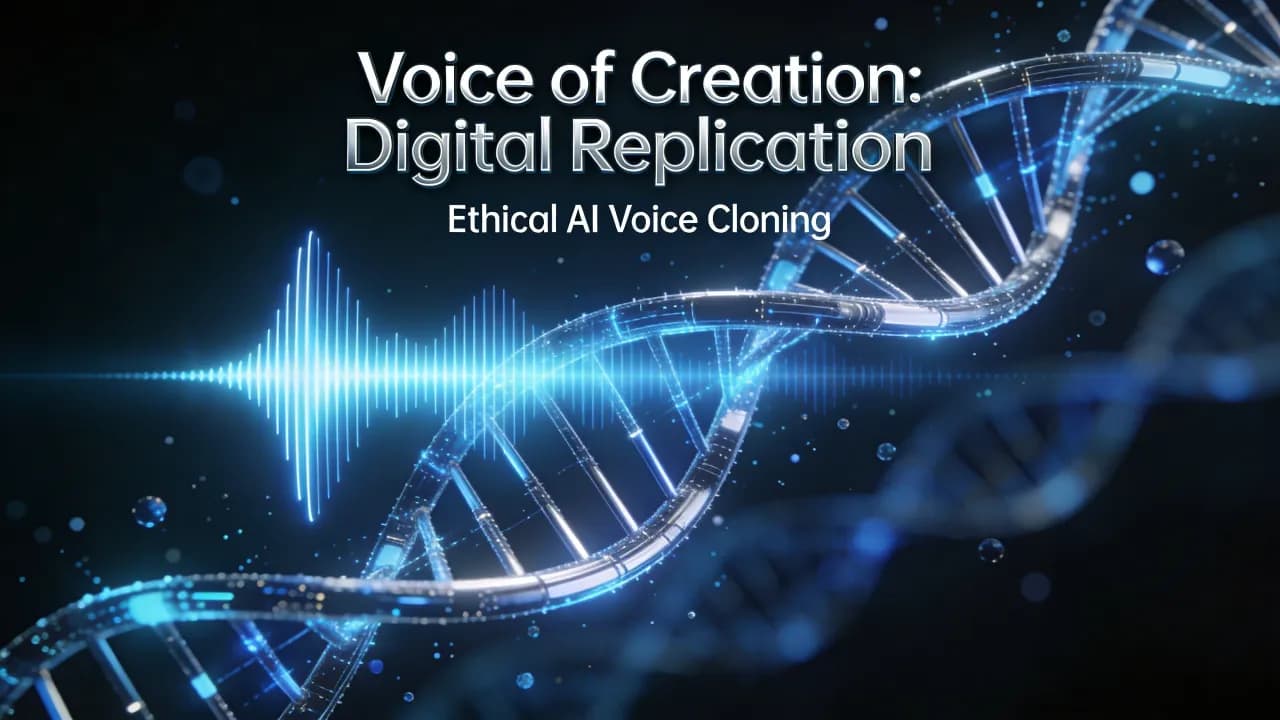
AI voice cloning uses deep learning models to analyze a sample of a human voice and generate new speech that sounds virtually identical to the original speaker. Modern systems typically need just a few minutes of high-quality audio to produce a convincing clone. The technology relies on neural networks trained on vast datasets of human speech, learning the subtle patterns of pitch, cadence, tone, and pronunciation that make each voice unique.
There are two main approaches to voice cloning. Text-to-speech (TTS) cloning converts written text into audio using your cloned voice. Speech-to-speech cloning transforms one voice recording into another voice in real time. Both have practical applications for creators, but TTS cloning is far more common for producing video narration, podcasts, and social media content.
Why Content Creators Are Adopting Voice Cloning
The appeal is straightforward: voice cloning solves real production bottlenecks. Here are the most common reasons creators are adopting the technology in 2026.
Scale narration without re-recording. Once your voice is cloned, you can generate narration for dozens of videos per week without sitting in front of a microphone. This is especially useful for faceless video channels that publish at high volume.
Multilingual content from one voice. Advanced cloning platforms can output your cloned voice in 30 or more languages, preserving your natural tone and inflection. This opens global audiences without hiring voice actors for every language.
Consistent brand voice. Teams with multiple editors can use a single cloned voice to maintain brand consistency across every piece of content, regardless of who writes the script.
Faster turnaround. Generating audio from text takes seconds instead of the hours required for traditional recording, editing, and re-takes. When combined with an AI content creation workflow, production speed can increase dramatically.
Accessibility. Creators with speech disabilities or vocal fatigue can maintain a reliable output using their cloned voice.
Top AI Voice Cloning Tools for Creators in 2026
The landscape has matured significantly. Here are the leading platforms that content creators rely on, each with different strengths.
ElevenLabs
ElevenLabs remains the gold standard for voice quality. Their Instant Voice Cloning feature produces remarkably natural results from as little as one minute of source audio. The platform supports over 30 languages, offers fine-grained emotion and pacing controls, and integrates with most video editing tools via API. Pricing starts with a free tier and scales based on character usage.
PlayHT
PlayHT offers an excellent balance of quality and affordability. Their voice cloning engine supports ultra-realistic output with SSML controls for pauses, emphasis, and speed. It is especially popular among podcasters and audiobook creators who need long-form narration at a reasonable cost.
Resemble AI
Resemble AI focuses on enterprise-grade cloning with strong ethical safeguards. They offer real-time voice generation, emotion injection, and a watermarking system that embeds an inaudible signature into every generated clip. This makes it easier to verify the origin of AI-generated audio.
Create videos like this with AI
Script, voiceover, images and subtitles — automated in minutes.
How to Clone Your Voice: A Step-by-Step Process
Getting started with voice cloning is more accessible than most creators expect. Follow these steps to produce a high-quality clone.
Step 1: Record clean source audio. Use a quiet room and a decent microphone. Record 3 to 10 minutes of natural speech reading a diverse script that covers various phonemes, emotions, and sentence structures. Avoid background noise and excessive room reverb.
Step 2: Upload to your cloning platform. Most tools accept WAV or MP3 files. Upload your recordings and let the model process them. Processing usually takes between 5 minutes and an hour depending on the platform.
Step 3: Test and refine. Generate several test clips with different types of content. Listen for unnatural artifacts, pronunciation errors, or tonal inconsistencies. Many platforms allow you to upload additional training data to improve accuracy.
Step 4: Integrate into your workflow. Once satisfied, connect the voice clone to your content production pipeline. Use API integrations or export audio files directly into your video editor.
The Ethics of AI Voice Cloning
Voice cloning raises genuine ethical concerns that responsible creators must address head-on. The same technology that lets you scale your own voice can be misused to impersonate others without consent.
Consent Is Non-Negotiable
Never clone someone else's voice without their explicit, informed consent. This applies to collaborators, employees, and especially public figures. Several jurisdictions now have laws specifically prohibiting unauthorized voice cloning, with penalties ranging from fines to criminal charges.
Disclosure and Transparency
Best practice in 2026 is to disclose when AI-generated voice is used in your content. Many platforms now require this, and audiences generally respond positively to transparency. A simple note in the video description or a brief verbal mention is sufficient. Being upfront builds trust rather than eroding it.
Deepfake Prevention
Use platforms that offer watermarking or fingerprinting on generated audio. This helps prevent your cloned voice from being extracted and misused by bad actors. If your platform offers consent verification features, enable them.
Practical Use Cases for Creators
Beyond basic narration, voice cloning opens up creative possibilities that were previously impractical or prohibitively expensive.
YouTube automation. Produce multiple videos per day for faceless channels by generating voiceover directly from scripts. Pair this with AI video tools for a fully automated pipeline.
Podcast production. Record intros, outros, and ad reads once, then regenerate them with updated information as needed without booking studio time.
Course creation. Build entire online courses with consistent narration. Update individual lessons without re-recording the entire module.
Social media at scale. Generate voice narration for TikTok, Reels, and Shorts in seconds, maintaining your personal brand voice across every platform.
Localization. Translate and dub your existing content library into new languages using your own cloned voice, dramatically lowering the cost of international expansion.
Tips for Getting the Best Results
The quality of your voice clone depends heavily on the input you provide and how you use the output. Keep these tips in mind.
Record source audio at 44.1 kHz or higher with a condenser microphone for the most accurate clone.
Include a range of emotions and speaking speeds in your training data so the model can reproduce them accurately.
Edit generated audio lightly. Minor adjustments to pacing and inflection in post-production can make AI speech sound significantly more natural.
Update your voice clone periodically if your natural voice changes over time due to aging, health, or style shifts.
Always preview the full audio before publishing. AI models can occasionally mispronounce uncommon words or proper nouns.
The Bottom Line
AI voice cloning is a transformative tool for content creators who want to produce more content, reach wider audiences, and work more efficiently. The technology is mature enough to deliver professional-quality results, and the cost has dropped to a point where even solo creators can afford it. The key is to use it responsibly: clone only your own voice or voices you have explicit permission to use, disclose AI involvement to your audience, and stay informed about the evolving legal landscape. When used ethically, voice cloning is one of the most powerful additions to any creator's toolkit in 2026.