
Choosing the right AI video tools for e-learning can significantly impact the quality and effectiveness of educational content. With advancements in AI, there are more options than ever, each offering unique features tailored to various educational needs.
In this article, we'll break down the top AI video tools available in 2026. By understanding their capabilities, you can make an informed decision on which tool best suits your e-learning strategy. Whether you are an educator, a content creator, or a training manager, this comparison will guide you in selecting the optimal solution.
What Makes AI Video Tools Essential for E-Learning?
AI video tools have revolutionized the e-learning landscape by providing automated solutions that enhance video content quality and engagement. These tools leverage AI to perform tasks such as automatic editing, voice synthesis, and personalization, making educational videos more interactive and appealing.
The capability of AI to analyze viewer preferences and adapt content accordingly is particularly beneficial. For example, tools like Vexub offer features that allow for the automatic generation of subtitles and translations, catering to a global audience. This adaptability makes AI video tools a must-have for modern e-learning.
Top AI Video Tools for E-Learning in 2026
When it comes to e-learning, not all AI video tools are created equal. Here, we compare some of the leading tools available in 2026, focusing on their unique features and how they cater to educational needs.
Vexub
Vexub stands out with its comprehensive suite of features tailored for e-learning. It offers seamless integration with learning management systems and supports a variety of video formats. Its AI-driven analytics provide insights into learner engagement, helping educators refine their content strategy.
Synthesia
Synthesia is renowned for its ability to create realistic AI avatars that can deliver personalized lessons in multiple languages. This tool is ideal for creating diverse and inclusive educational content. Its ease of use and scalability make it a popular choice among educators.
Pictory
Pictory excels in transforming text-based content into engaging video presentations. Its AI-driven editing capabilities enable users to create professional-grade videos with minimal effort. This tool is perfect for educators looking to convert existing course material into video format.
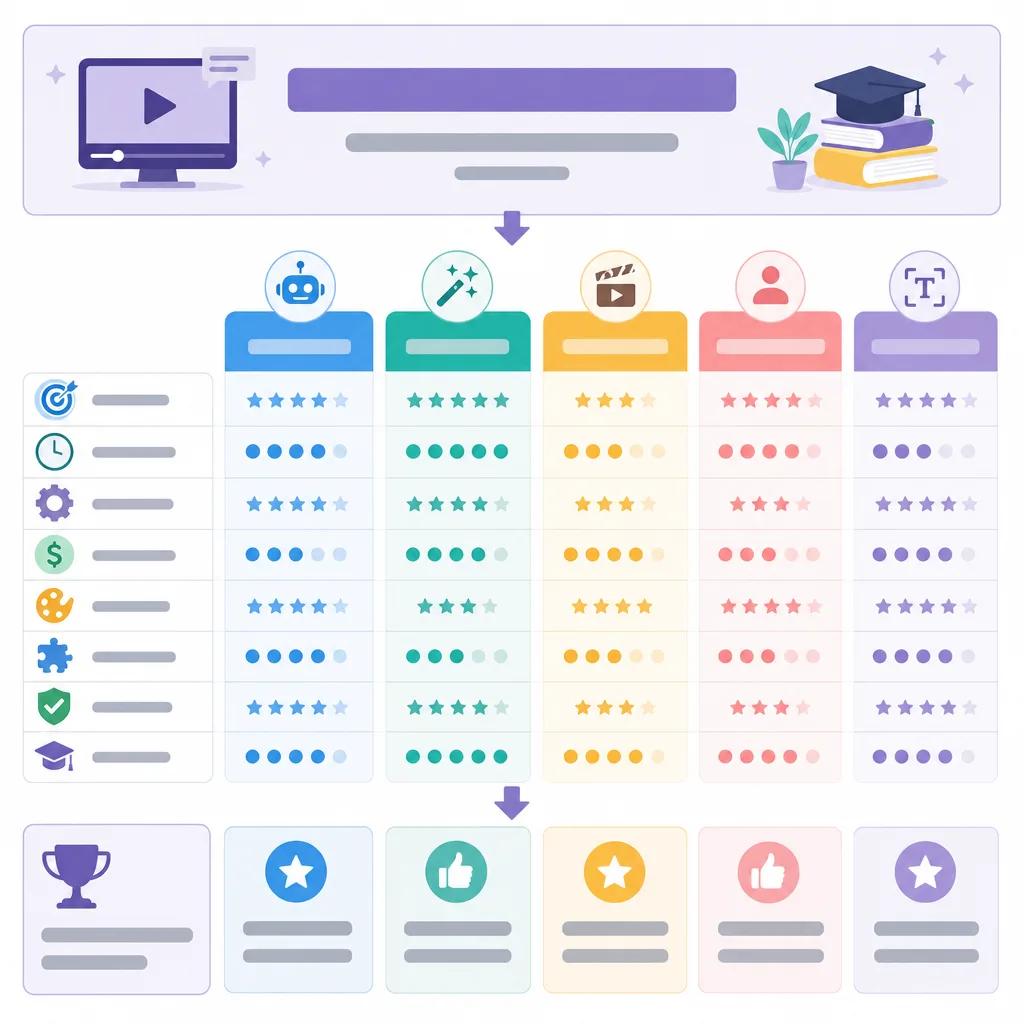
How to Choose the Right AI Video Tool for Your Needs
Selecting the right AI video tool depends on several factors including your educational objectives, budget, and technical expertise. Here are some key considerations:
Assess the specific features offered by each tool and how they align with your educational goals.
Consider the level of customization and personalization each tool provides.
Evaluate the cost-effectiveness of the tool in relation to its features and your budget constraints.
By thoroughly evaluating these aspects, you can choose a tool that not only meets your current needs but also scales with your future e-learning aspirations. Tools like Vexub provide a balanced mix of features and affordability, making them a strong contender.
Create videos like this with AI
Script, voiceover, images and subtitles — automated in minutes.
Benefits of Using AI Video Tools in E-Learning
AI video tools offer a multitude of benefits for e-learning, enhancing both content creation and learner engagement. Here are some of the primary advantages:
Increased Efficiency: AI automates repetitive tasks, allowing educators to focus on content quality rather than production.
Enhanced Engagement: Interactive features like quizzes and polls can be easily integrated, improving learner involvement.
Scalability: AI tools support the creation of large volumes of content quickly, facilitating the scaling of educational programs.
Moreover, these tools often incorporate advanced analytics, providing insights into how learners interact with content. This data helps educators refine their approach, ensuring that the content remains relevant and effective.
Challenges and Limitations of AI Video Tools
While AI video tools offer numerous benefits, they are not without challenges. One major limitation is the initial learning curve involved in mastering these tools. Educators may need to invest time in training to fully leverage the capabilities of AI.
Another challenge is the potential for over-reliance on automation, which can lead to a loss of personal touch in educational content. Balancing automation with human input is crucial to maintaining content quality and authenticity.

Future Trends in AI Video Tools for E-Learning
Looking ahead, AI video tools are set to become even more integral to e-learning, with emerging trends enhancing their capabilities further. Expect to see advancements in areas such as AI-driven personalization, where content is tailored to individual learner profiles, enhancing engagement and comprehension.
Additionally, the integration of virtual reality and augmented reality with AI video tools will open new possibilities for immersive learning experiences. As these technologies evolve, platforms like Vexub are well-positioned to lead the way in innovative educational solutions.
For more insights, explore how AI is reshaping other domains such as ", AI video editing vs traditional editing, " and ", best practices for AI video content creation, ". By staying informed, you can harness these tools effectively to enhance your educational offerings.