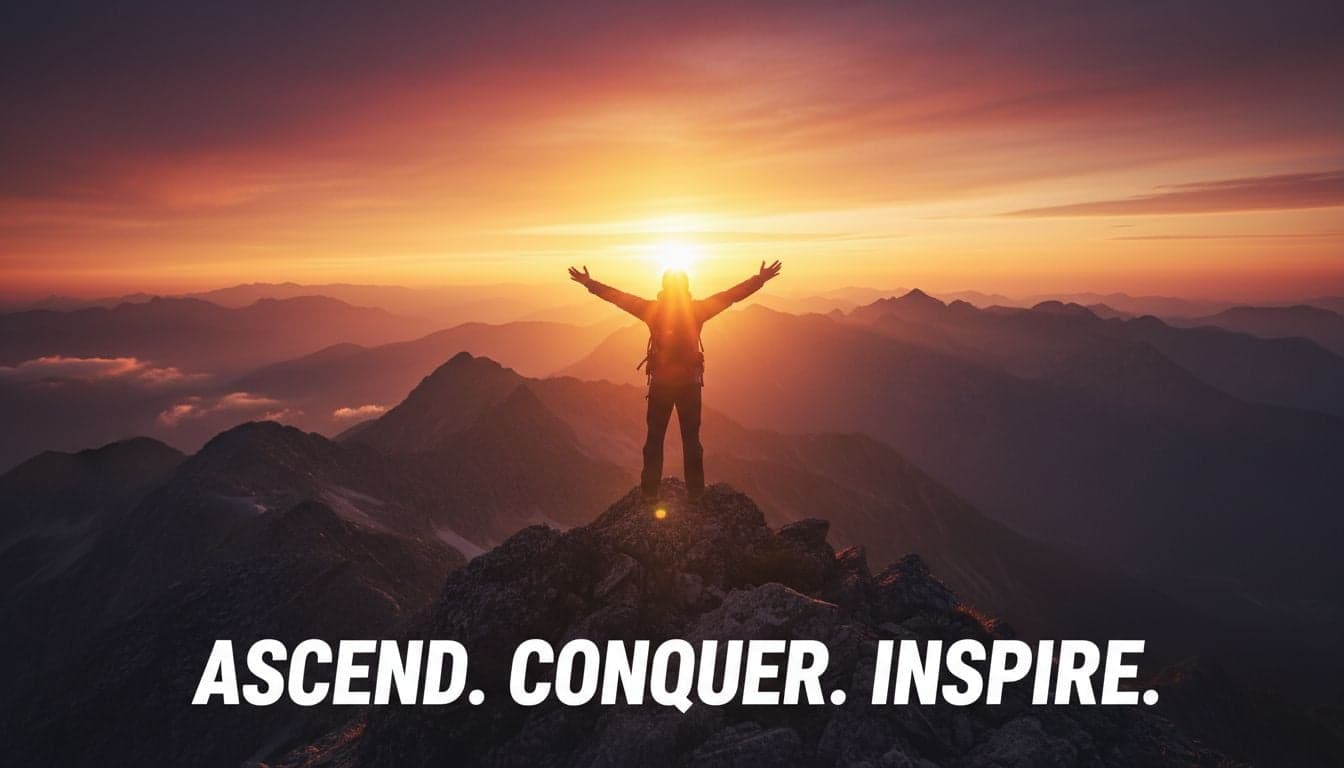
The self-improvement niche generated over 4.2 billion views on YouTube in 2025, with channels earning between $3,000 and $47,000 monthly from ad revenue alone. Creators like Better Ideas and Improvement Pill built million-subscriber audiences without ever showing their faces, proving that compelling visuals and powerful narration trump personal branding in this niche.
AI video generation has eliminated the traditional barriers to starting a motivation YouTube channel. You no longer need expensive stock footage subscriptions, professional voice actors, or video editing expertise. A single person can now produce 15-20 high-quality motivational videos per week using AI tools that handle visuals, voiceovers, and editing automatically.
This guide shows you how to build a self-improvement YouTube channel that attracts subscribers and generates revenue using AI-powered video creation, starting from your first video to scaling to multiple uploads per week.
Why Self-Improvement Content Dominates YouTube
Self-improvement videos perform exceptionally well on YouTube because viewers actively seek transformation. Unlike entertainment content that people watch passively, someone searching for "how to build discipline" or "morning routine for success" has immediate intent to change their life.
The niche benefits from several algorithmic advantages:
High watch time: Viewers watch 8-12 minute self-improvement videos completely, signaling quality to YouTube's algorithm.
Repeat viewership: People return to motivational content during difficult periods, creating sustained engagement.
Broad appeal: Self-improvement spans ages 18-65, unlike gaming or beauty niches with narrower demographics.
Low controversy: Advertiser-friendly content that rarely triggers demonetization.
Channels in this niche typically earn $4-$8 CPM (cost per thousand views), with psychology and productivity subtopics reaching $12-$15 CPM due to high-value advertisers targeting professional audiences.
AI-Generated Visuals for Motivational Content
Traditional motivational videos rely on stock footage of sunrises, people running, and gym scenes that viewers have seen thousands of times. AI video generation creates unique visuals that match your specific narrative, making your content stand out in a saturated niche.
Effective Visual Styles for Self-Improvement
Different visual approaches resonate with different audience segments:
Cinematic realism: AI-generated scenes of individuals achieving goals, working intensely, or experiencing breakthrough moments. Works well for achievement-focused content.
Abstract metaphors: Stylized visuals representing concepts like "breaking chains," "climbing mountains," or "internal battles." Effective for philosophical and psychological topics.
Educational graphics: Clean infographic-style visuals explaining frameworks, habits, and systems. Appeals to analytical viewers.
Nature and symbolism: AI-generated landscapes, weather patterns, and natural phenomena representing emotional states and transformation.
Vexub's image style library includes pre-configured templates for each approach, allowing you to maintain visual consistency across your channel while creating unique content for every video.
Building Visual Narratives
Strong motivational videos synchronize visuals with narration to create emotional impact. When your script discusses "breaking free from comfort zones," the visual should show a literal representation—a person stepping through a barrier, climbing over an obstacle, or emerging from darkness into light.
AI video tools excel at creating these synchronized moments because they generate visuals based on your script's specific language. Instead of searching stock libraries for approximately relevant footage, you describe exactly what you need and the AI creates it.
Create videos like this with AI
Script, voiceover, images and subtitles — automated in minutes.
Crafting Scripts That Transform Viewers
The most successful self-improvement channels follow proven script structures that guide viewers from their current pain point to a clear solution. Your scripts need three elements: recognition, framework, and activation.
Recognition: Validating the Struggle
Start by articulating the specific problem your viewer faces. Generic statements like "many people struggle with motivation" don't create connection. Specific recognition like "You set your alarm for 5 AM, hit snooze until 7:30, and spend the morning hating yourself for wasting another day" makes viewers feel understood.
Spend 60-90 seconds on recognition. This builds trust and ensures viewers who need your message keep watching.
Framework: The System for Change
Present a clear, actionable framework—not vague inspiration. Instead of "believe in yourself and work hard," provide specific systems like:
The 2-Minute Rule: Start any habit by committing to just 2 minutes. Want to read more? Read one page. Want to exercise? Do one pushup.
Implementation Intentions: Replace "I will exercise" with "After I pour my morning coffee, I will do 10 pushups in the kitchen."
Habit Stacking: Attach new behaviors to existing routines. "After I brush my teeth, I will write three things I'm grateful for."
Frameworks make your content rewatchable. Viewers return to review specific steps, which signals to YouTube that your video provides lasting value.
Activation: The Next Step
End with a specific action viewers can take in the next 24 hours. "Tomorrow morning, before checking your phone, write down the one thing that would make tomorrow a successful day. Just one thing. Do this for seven days and notice what changes."
Activation creates engagement. Viewers comment with their results, which improves your video's ranking and builds community around your channel.
Voice and Narration Strategy
Voice selection dramatically impacts how your message resonates. The same script about discipline sounds authoritative with a deep, measured voice and conversational with a warmer, faster delivery.
AI voice generation offers hundreds of options, but self-improvement content performs best with these characteristics:
Moderate pace: 145-160 words per minute. Fast enough to maintain energy, slow enough for comprehension and reflection.
Controlled emotion: Subtle vocal variation that emphasizes key points without sounding overly dramatic.
Professional clarity: Clean pronunciation without heavy accents that might distract from the message.
Gender selection: Test both. Male voices often perform better for achievement and discipline content, while female voices resonate more with wellness and self-compassion topics, but these are generalizations—your specific audience may differ.
Generate multiple voice options for your first 3-5 videos and track performance metrics. Watch time and audience retention graphs in YouTube Analytics reveal which voice keeps viewers engaged longest.
Consider using AI voice cloning if you want to develop a unique sonic identity for your channel without recording yourself.
Optimizing for YouTube's Algorithm
YouTube prioritizes videos that keep viewers on the platform. Self-improvement content succeeds when it balances viewer satisfaction with YouTube's business goals.
Title and Thumbnail Formula
Your title must promise specific value while triggering curiosity. Compare these approaches:
Weak: "How to Be More Productive"
Strong: "I Wasted 10 Years Being Busy. Here's What Actually Works"
The strong version promises a tested solution while creating curiosity about the wasted decade. It speaks directly to viewers who feel busy but unproductive.
Thumbnails for faceless motivation channels rely on text, symbols, and emotional color theory:
Text hierarchy: 3-5 words maximum in large, bold font. "The Discipline Equation" or "Why You Fail"
Visual metaphor: A single powerful image that represents the concept—a breaking chain for freedom, a fork in a road for decision-making, scales for balance.
Color psychology: Red and orange for urgency and energy, blue for trust and calm, black with gold accents for premium authority.
Content Calendar Strategy
Successful faceless channels publish 3-5 videos weekly, which seems impossible for solo creators using traditional methods. AI video generation makes this achievable by reducing production time from 6-8 hours per video to 45-90 minutes.
Structure your content calendar around three video types:
Core philosophy: Deep dives into frameworks and systems. 10-15 minutes. Published Tuesdays and Thursdays.
Quick principles: Single-concept videos explaining one technique or mental model. 5-7 minutes. Published Mondays, Wednesdays, Fridays.
Series content: Multi-part explorations of topics like "30 Days of Stoicism" or "The Complete Guide to Discipline." Creates playlist depth and encourages binge-watching.
This variety keeps your channel fresh while building a comprehensive library that attracts different viewer intentions.
Monetization Beyond AdSense
Ad revenue provides baseline income, but diversified monetization multiplies earnings per subscriber. A channel with 50,000 subscribers might earn $2,000 monthly from ads but $12,000 monthly with additional revenue streams.
Digital Products and Courses
Your YouTube channel builds trust that converts into course sales. Viewers who watch 20+ videos develop strong parasocial relationships and actively seek deeper transformation.
Start with a $27-47 foundational course teaching your core system in detail. Use the same AI tools creating your YouTube videos to produce course content, maintaining visual and vocal consistency while adding worksheets and implementation guides.
Promote your course subtly in video descriptions and end screens, not in the video itself, to avoid appearing sales-focused.
Affiliate Partnerships
Recommend tools and resources you genuinely use. Self-improvement viewers appreciate curated recommendations for:
Productivity software (Notion, Todoist, RescueTime): 25-40% commission
Book recommendations: Amazon Associates provides 4-8% on purchases
Online learning platforms: Skillshare, Udemy, MasterClass offer affiliate programs
Wellness products: Supplements, meditation apps, fitness equipment
AI video tools themselves can become affiliate products. If your channel discusses content creation as part of self-improvement, joining affiliate programs for the tools you use creates authentic revenue opportunities.
Membership and Community
YouTube memberships and Patreon work exceptionally well for self-improvement channels because viewers value accountability and community. Offer members:
Weekly accountability check-ins
Extended video content with deeper implementation details
Private community access for questions and support
Monthly live Q&A sessions
Even a 2% membership conversion rate (100 members from 5,000 subscribers at $5-10 monthly) adds $500-1,000 recurring revenue.
Scaling Production with AI Workflows
The difference between a hobby channel and a profitable business often comes down to consistent output. AI video generation enables one person to match the production volume of a small team.
Effective creators batch their work into focused sessions:
Script day: Write 5-7 scripts in one session using proven templates. Each script takes 20-30 minutes once you internalize your structure.
Production day: Generate all videos in a single AI video session. With refined prompts and consistent settings, each video takes 30-45 minutes from script to export.
Optimization day: Create thumbnails, write descriptions, schedule uploads, and plan promotion for the week's content.
This batching approach maintains creative consistency while reducing the mental switching cost of jumping between tasks. You'll develop faster workflows and better pattern recognition for what performs well.
Related reading: Building a Faceless YouTube Channel covers additional scaling strategies, and Stoic Philosophy YouTube Niche explores a complementary content approach that pairs well with general self-improvement.
Measuring Success and Iterating
YouTube Analytics reveals exactly what works. Track these metrics weekly:
Average view duration: Target 50%+ retention. If viewers leave before halfway, your hook needs work or your pacing drags.
Click-through rate: Aim for 6-10%. Lower CTR means your titles and thumbnails don't compel clicks.
Subscriber conversion: How many viewers subscribe after watching? Self-improvement channels should convert 2-4% of viewers into subscribers.
Traffic sources: YouTube search and suggested videos should drive 60-80% of views. Heavy reliance on external sources indicates weak YouTube algorithm performance.
Every 10 videos, analyze your top 3 performers and identify patterns. Did they share a similar title structure? Did certain visual styles retain viewers longer? Did specific topics generate more comments and discussion?
Double down on what works while gradually testing variations. If philosophical content about Stoicism outperforms tactical productivity tips, shift your content mix. The algorithm rewards channels that find their lane and consistently serve their audience's demonstrated preferences.
Starting Your First Video Today
The path from idea to published video takes less than 2 hours with AI tools. Your first video won't be perfect, but publishing imperfect content beats planning perfect content indefinitely.
Choose a topic you genuinely care about—something you've struggled with and overcome, or currently work to improve. Authentic connection with your material shows in your writing and makes scripts feel conversational rather than preachy.
Write a 1,200-1,500 word script following the recognition-framework-activation structure. Read it aloud and time yourself. Aim for 8-10 minutes of narration at your natural speaking pace.
Generate your video using AI tools that match your script to appropriate visuals. Review the output, make adjustments to timing or scene selection if needed, and export.
Publish. Schedule your next four videos. Improve with each upload.
Six months from now, you'll have 60-80 videos building compounding views, a growing subscriber base, and multiple revenue streams—all from content you created without ever appearing on camera or investing thousands in equipment and editors.