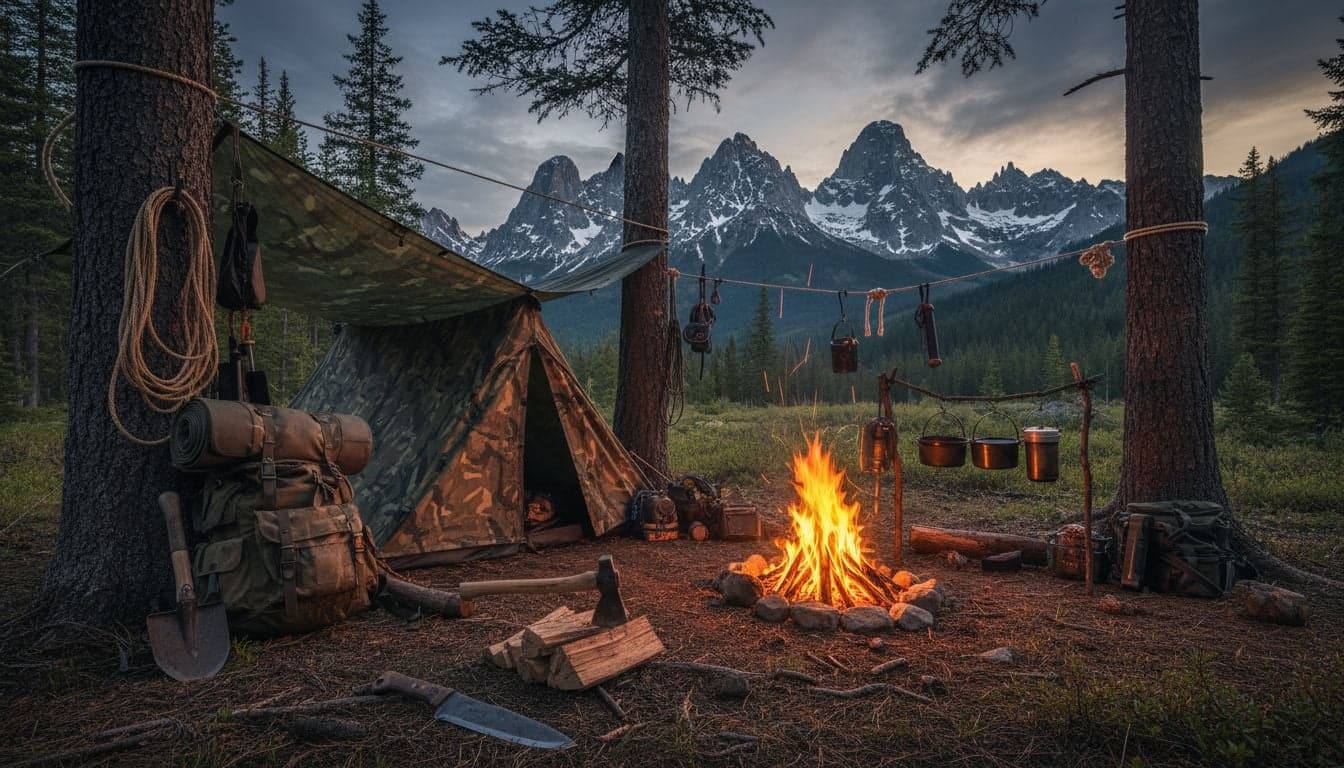
The survival and preparedness niche generates over 500 million monthly YouTube views, with top channels earning $15,000-$40,000 per month. Viewers actively search for bushcraft techniques, emergency preparedness guides, and wilderness survival skills—creating perfect conditions for a faceless channel powered by AI-generated visuals.
AI tools now generate realistic wilderness scenes, survival scenarios, and instructional visuals that match the quality of traditional video production. This technology removes the need for expensive outdoor filming equipment, wilderness locations, or on-camera presence while maintaining the authentic feel survival content demands.
The prepping audience values practical information over personality-driven content, making this niche ideal for faceless channels. Viewers focus on learning specific skills, evaluating gear, and understanding survival scenarios rather than connecting with a creator's personal brand.
Why Survival Content Works for Faceless Channels
The survival and prepping niche offers unique advantages for creators using AI-generated content. The audience's priorities align perfectly with what automated video production delivers best.
Survival viewers seek detailed visual demonstrations of techniques—how to build shelters, start fires, purify water, or navigate terrain. AI-generated sequences can illustrate these processes step-by-step with clarity that sometimes surpasses shaky handheld outdoor footage. The focus remains on the information and technique rather than the creator's filming skills.
High CPM rates: Survival content attracts $8-$18 CPM due to gear advertisers and emergency supply sponsors. The audience actively purchases products, making your channel valuable to advertisers.
Evergreen topics: Basic survival skills remain relevant indefinitely. A video about water purification methods filmed today will generate views for years without becoming outdated.
Search-driven traffic: People search specific survival queries: 'how to build emergency shelter' or 'best water filtration methods.' This creates consistent organic traffic independent of algorithm changes.
Multiple sub-niches: Wilderness survival, urban prepping, homesteading, bushcraft, tactical preparedness, and disaster planning all fall under this umbrella, providing endless content angles.
The survival community also values accuracy over production quality. A well-researched video with clear AI-generated visuals will outperform a poorly-informed creator filming in actual wilderness. Your competitive advantage comes from thorough research and precise visual sequences, not expensive equipment or dangerous locations.
Content Categories That Generate Views
Successful survival channels balance educational content with scenario-based videos. This structure keeps your channel fresh while building authority across multiple topics.
Skill-Based Tutorials
Instructional content forms the foundation of survival channels. These videos teach specific techniques viewers can practice and apply in real situations.
Fire-starting methods: Demonstrate friction fire, flint and steel, fire plow, and bow drill techniques using AI-generated sequences showing each step clearly.
Shelter construction: Show how to build debris huts, lean-tos, snow caves, and emergency shelters with detailed visual breakdowns.
Water procurement: Illustrate purification methods, finding water sources, building solar stills, and creating filtration systems.
Navigation skills: Teach compass use, celestial navigation, map reading, and natural navigation indicators.
Food acquisition: Cover edible plant identification, basic trapping, fishing techniques, and food preservation.
Each tutorial should run 8-15 minutes, providing enough depth to be genuinely useful while maintaining viewer attention. Break complex skills into sequential steps with clear visuals showing each stage.
Gear Reviews and Comparisons
Equipment content attracts high-intent viewers ready to make purchases, boosting your affiliate potential and ad revenue. The survival community constantly evaluates gear for reliability and effectiveness.
Create comparison videos testing different gear categories: budget versus premium survival knives, various fire-starting tools, emergency food options, or water filtration systems. Use AI-generated scenes showing each item in realistic survival scenarios rather than simple product shots.
Detailed specification breakdowns perform well—weight, durability, temperature ratings, or material composition. Survival viewers want technical details before investing in gear they might depend on in emergencies.
Scenario-Based Content
Hypothetical survival situations generate strong engagement because viewers mentally rehearse responses. These videos combine entertainment with practical preparation.
Lost in wilderness scenarios specific to regions: forests, deserts, mountains, or arctic conditions
Urban disaster preparedness: building bug-out bags, securing homes, establishing emergency supplies
Seasonal survival challenges: extreme cold, heat waves, flooding, or winter storms
72-hour challenge walkthroughs: what to do in the first three days of various emergencies
Frame these scenarios realistically with specific environmental details. 'Surviving a blizzard in your car' performs better than vague 'winter survival' content because viewers can visualize the exact situation.
Create videos like this with AI
Script, voiceover, images and subtitles — automated in minutes.
Building Your AI Survival Channel
Creating a successful faceless survival channel requires strategic planning beyond just generating videos. Your channel structure, research process, and content calendar determine long-term growth.
Channel Positioning Strategy
The survival niche contains numerous established channels, so differentiation matters. Rather than becoming another general survival channel, stake out a specific angle that sets your content apart.
Consider these positioning approaches: focus exclusively on urban survival and disaster preparedness for city dwellers; specialize in budget survival using common household items; create content for specific climates or regions; or target complete beginners with foundational skills before advancing to complex techniques.
Your channel name and branding should clearly communicate this focus. 'Urban Survival Academy' immediately signals your niche, while 'Survival Tips' remains too generic to stand out. Check out our complete faceless YouTube channel guide for detailed branding strategies.
Research and Accuracy
Survival content carries responsibility—viewers may implement your advice in actual emergencies. Thorough research separates valuable channels from dangerous misinformation.
Source information from verified survival manuals, military field guides, wilderness medicine texts, and experienced instructors. Cross-reference techniques across multiple authoritative sources before including them in videos. The U.S. Army Survival Manual, SAS Survival Handbook, and Bushcraft 101 provide reliable foundational knowledge.
Acknowledge regional variations and limitations. A shelter technique effective in temperate forests might fail in desert environments. Water purification methods vary based on contamination types. Specify the conditions where each technique works best.
Creating AI-Generated Survival Visuals
The visual quality of your survival content directly impacts credibility. Viewers need to see techniques clearly demonstrated, making your AI generation prompts crucial.
Describe scenes with specific environmental details: 'dense pine forest with morning mist, fallen logs covered in moss, person kneeling beside small fire pit arranging dry tinder.' Specific prompts generate more realistic and useful visuals than generic 'person making fire in woods.'
Maintain consistent visual style across videos. If you start with photorealistic wilderness scenes, continue that aesthetic throughout your channel. Mixing drastically different art styles damages credibility and professional appearance.
Generate sequence shots showing progression: gathering materials, preparing materials, executing technique, final result
Include close-up detail shots for critical steps like hand positions, knot-tying, or tool angles
Show environmental context establishing the scenario—weather conditions, terrain type, available resources
Create comparison shots demonstrating correct versus incorrect techniques
Optimizing for YouTube Search and Discovery
Survival content lives primarily through search traffic rather than algorithm recommendations. Your SEO strategy must target how people actually search for survival information.
People search survival topics with specific intent: solving immediate problems or learning particular skills. Optimize titles and descriptions for these exact search queries rather than vague titles.
'How to Purify Water Without a Filter - 5 Emergency Methods' targets specific searches and promises clear value. Compare this to 'Water Purification Tips,' which lacks specificity and fails to capture search traffic effectively.
Keyword Research for Survival Content
Use YouTube's autocomplete to discover exact phrases people search. Type 'how to survive' and record the suggestions. Try 'emergency shelter,' 'wilderness survival,' 'prepping for,' and other base terms to build a comprehensive keyword list.
Long-tail keywords convert better in survival content. Someone searching 'survival' probably won't watch your video, but 'how to start fire with wet wood' indicates high intent and readiness to watch a detailed tutorial.
Question-based keywords: 'how to,' 'what is,' 'when should,' 'where to find'
Comparison keywords: 'versus,' 'best for,' 'budget versus premium,' 'which type'
Emergency keywords: 'without equipment,' 'in emergency,' 'last resort,' 'improvised'
Skill-level keywords: 'beginner,' 'advanced,' 'basic,' 'expert techniques'
The survival niche also benefits from trending topics during disasters or extreme weather events. When hurricanes approach, searches for hurricane preparedness spike. Have evergreen content ready that becomes timely during these events. The highest RPM YouTube niches guide shows how timely content in valuable niches drives revenue.
Thumbnail Strategy for Survival Videos
Survival thumbnails need to communicate the specific skill or scenario immediately while standing out in search results. Viewers scan dozens of similar videos, so visual differentiation matters.
Show the end result or critical technique moment: a completed shelter, hands demonstrating a fire-starting position, or water being purified. Add bold text highlighting the specific method: 'NO LIGHTER,' 'URBAN METHOD,' or '5 WAYS.' Use contrasting colors—bright text on natural backgrounds—to ensure readability.
Include visual indicators of difficulty or scenario: a warning icon for advanced techniques, a city skyline for urban content, or weather symbols for condition-specific methods. These visual cues help viewers quickly identify relevant content.
Monetization Beyond AdSense
Survival channels offer exceptional monetization diversity. The audience actively purchases gear, courses, and supplies, creating multiple revenue streams beyond standard YouTube ads.
Affiliate Marketing for Survival Gear
Survival viewers research extensively before buying gear, making affiliate links highly effective. When you demonstrate a specific knife, water filter, or fire starter, viewers trust your recommendation because you've shown it in action.
Join Amazon Associates for broad product coverage, plus specialized outdoor retailers like REI, Backcountry, or Sportsman's Guide for higher commission rates on premium gear. Some survival brands offer 10-15% commissions compared to Amazon's 3-4%.
Create dedicated gear lists in video descriptions organized by category: 'Budget Survival Kit ($50),' 'Complete Bug-Out Bag ($300),' or 'Essential Bushcraft Tools.' Link every mentioned item, making it easy for viewers to purchase complete setups.
Digital Products and Courses
Package your knowledge into digital products that provide deeper value than free YouTube content. Survival enthusiasts willingly pay for comprehensive, organized information.
Downloadable checklists: bug-out bag lists, seasonal preparation guides, skill progression trackers
PDF guides: detailed manuals on specific skills with illustrations and step-by-step instructions
Video courses: multi-hour training programs teaching complete skill sets from beginner to advanced
Membership community: exclusive content, gear reviews, and personalized advice for monthly subscribers
Sell these through platforms like Gumroad, Teachable, or Patreon. Mention them naturally in relevant videos: 'For a complete 50-page guide with illustrations of every knot mentioned, check the description.'
Sponsorships and Brand Deals
Survival gear companies actively seek YouTube partnerships because your audience matches their customer profile perfectly. Once you reach 10,000+ subscribers, approach brands directly rather than waiting for them to contact you.
Prepare a media kit showing your audience demographics, average views, engagement rates, and typical video topics. Emphasize your audience's purchasing behavior—survival viewers research gear seriously and make considered purchases, making them valuable to advertisers.
Integrated sponsorships work best in survival content. Rather than separate ad reads, demonstrate the sponsored product in an actual technique: 'Today's shelter build uses this particular cordage from [Brand].' This maintains content flow while showcasing the product authentically.
Content Calendar and Consistency
Successful survival channels publish consistently, building libraries of interconnected content. Each video should standalone while connecting to broader channel themes.
Plan content in seasonal blocks. Winter approaches? Release cold-weather survival series. Hurricane season? Focus on storm preparedness and evacuation planning. This timing matches viewer search behavior and capitalizes on trending topics.
Structure your release schedule around skill progression: start with beginner fundamentals, advance to intermediate techniques, then cover expert-level scenarios. New viewers can work through your catalog sequentially, while experienced viewers appreciate advanced content.
Week 1: Basic fire-starting with common materials
Week 2: Advanced fire techniques for wet conditions
Week 3: Fire safety and wilderness fire management
Week 4: Improvised fire-starting without modern tools
This progression keeps viewers engaged long-term because you're building on previous knowledge. Reference earlier videos in your series: 'Last week we covered basic friction fire—now let's apply that to wet wood scenarios.'
Batch-create content during production sessions. Generate 10-15 AI visual sequences in one sitting, then write scripts for all videos. This approach maintains visual consistency and streamlines your workflow. Learn more about efficient AI content creation workflows to maximize your production efficiency.
Growing Your Survival Channel Authority
Building credibility in the survival niche requires more than just publishing videos. Your channel needs to become a trusted resource viewers return to repeatedly and recommend to others.
Engage deeply with comments, answering questions thoroughly and acknowledging viewer experiences. When someone shares their successful fire-starting attempt using your method, feature their comment in a community post or thank them in a video. This builds community and demonstrates that real people apply your teachings.
Collaborate with other creators, even as a faceless channel. You can create complementary content responding to each other's videos, compile best survival myths to debunk together, or create comparison videos analyzing different approaches to the same challenge.
Create playlists organizing your content by skill level, scenario type, or geographic region. A viewer interested in desert survival can watch your complete desert playlist sequentially, increasing watch time and session duration—metrics YouTube rewards with better recommendations.
Update older videos when techniques evolve or better information emerges. Add cards linking to newer, improved versions: 'I've since created an updated version of this technique with clearer steps.' This maintains your channel's accuracy while leveraging existing video traffic.
The survival and prepping niche rewards creators who provide genuine value consistently. Your faceless channel can build substantial authority by focusing on thorough research, clear visual demonstrations, and practical information viewers can immediately apply. AI-generated content removes the barriers of expensive filming and dangerous outdoor shoots while maintaining the instructional clarity this audience demands.