The creators who dominate TikTok in 2026 don't post random videos hoping something sticks. They build recurring series that train their audience to expect and anticipate their next upload. Every successful creator from @khaby.lame to @zachking built their following on recognizable formats that viewers could identify instantly.
The problem? Maintaining a consistent series requires producing similar content at scale—something that traditionally meant hours of filming, editing, and creative energy. AI video creation changes this equation completely. You can now produce high-quality TikTok series content that maintains perfect consistency across dozens of episodes while spending a fraction of the time.
This guide reveals exactly how to build TikTok series content using AI tools like Vexub, from choosing your series concept to automating production while maintaining the creative control that makes your content unique.
Why Series Content Dominates TikTok in 2026
TikTok's algorithm rewards creators who keep viewers on the platform longer. Series content creates a compounding effect that single videos cannot match:
Predictable performance: When viewers recognize your series format, they're 3-4x more likely to watch until completion, directly boosting your average view duration.
Binge-watching behavior: Series content triggers the same psychological response as TV shows—viewers consume multiple episodes in one session, dramatically increasing your total watch time.
Reduced creative fatigue: Instead of brainstorming entirely new concepts daily, you execute variations on a proven template.
Brand recognition: A consistent visual style and format makes your content instantly identifiable in the feed, even before viewers see your username.
The data supports this strategy. Creators running series content report 40-60% higher follower conversion rates compared to varied content approaches. When someone watches three episodes of your series, they're essentially getting a sample of exactly what subscribing will bring them.
Choosing Your TikTok Series Format
Not every series concept will work for your niche or audience. The most successful TikTok series share specific characteristics that make them sustainable and engaging:
Series Formats That Scale With AI
Number-based series: "Top 5 Hidden Features in [Topic]" or "3 Mistakes Killing Your [Result]" — these formats work because they're endlessly repeatable and viewers know exactly what to expect.
Daily/weekly challenges: "Day 47 of Learning [Skill]" or "Testing Viral [Product] Until One Works" — progress-based series create narrative momentum that keeps viewers returning.
Reaction or analysis series: "Rating Your [Submissions]" or "Breaking Down Viral [Content Type]" — these leverage user-generated content or trending topics for endless material.
Educational deep-dives: "Psychology Facts You Didn't Know #28" or "Historical Events That Changed Everything" — educational content with a consistent structure and visual style.
Story-driven series: "Unsolved Mysteries Explained" or "True Crime Cases" — narrative content that unfolds across multiple episodes.
Matching Format to AI Capabilities
When planning your series for AI production, consider what can be systematized. The best AI-friendly series have:
A consistent visual template that can be replicated across episodes
A predictable script structure that varies in content but not format
Clear episode delineation (numbering, titles, or themes that distinguish each installment)
Content that doesn't require live filming or real-time reactions
For example, a faceless TikTok account running a "Did You Know" series about space can produce 30 episodes with consistent branding, voiceover style, and visual effects—all generated through AI in a fraction of the time traditional production would require.
Create videos like this with AI
Script, voiceover, images and subtitles — automated in minutes.
Building Your Series Production System
The key to sustainable series content isn't creating one great video—it's building a production system that lets you create 50 great videos without burning out. Here's how to structure your AI-powered workflow:
Step 1: Create Your Series Template
Open Vexub and design your first episode with extreme attention to detail. This becomes your reference point for every future episode:
Choose a specific image style that will be your series signature (cinematic, anime, photorealistic, etc.)
Select your voice and save it—consistency in audio is as important as visual consistency
Design your subtitle style and positioning—viewers should recognize your series format even with sound off
Establish your pacing—how many scenes per video, average scene duration, transition types
Set your music or audio style—the same background track or genre creates familiarity
Document every choice you make. Screenshot your settings panel. Note the exact image style name, voice settings, and any custom parameters. This documentation becomes your production bible.
Step 2: Systematize Your Script Structure
Write a script template that works across all episodes. For example, a "Psychology Facts" series might follow this pattern:
Hook (3-5 seconds): "This psychological trick makes people trust you instantly..."
Context (5-8 seconds): "Scientists at [University] discovered that..."
Explanation (15-20 seconds): The detailed breakdown of the concept
Application (8-10 seconds): "Next time you [situation], try this..."
Closer (3-5 seconds): "Follow for part [number]" or teaser for next episode
This template ensures every episode feels cohesive while allowing you to plug in different content. You're not rewriting the structure—just filling in the variables.
Step 3: Batch Content Creation
The efficiency of AI video creation comes from batching. Instead of producing one video at a time, create 7-10 episodes in a single session:
Spend 60-90 minutes writing scripts for 7-10 episodes using your template
Generate all episodes in Vexub consecutively, using your saved template settings
Review and make minor adjustments to maintain quality consistency
Export all videos and schedule them for the week or month ahead
This batching approach reduces context switching and ensures visual consistency since you're working with the same mindset and settings across all episodes.
Advanced Series Strategies for Growth
Once your basic series is running, implement these advanced tactics to accelerate growth and engagement:
Create Connected Episode Narratives
Reference previous episodes explicitly: "In episode 23, we covered [topic]—today we're going deeper." This accomplishes two things: it rewards loyal viewers who've been following along, and it creates FOMO for new viewers who want to understand the full story.
Number your episodes prominently in the video and caption. When someone discovers episode 47, they immediately understand there's a backlog of content to explore. This dramatically increases profile visits and binge-watching sessions.
Use Milestone Episodes Strategically
Every 10th or 25th episode, create something special. "Episode 50: The 5 Most Requested Topics" or "Episode 100: Behind the Scenes of This Series." Milestone episodes perform exceptionally well because they:
Give you natural promotion opportunities ("Almost at episode 50!")
Provide recap value for new viewers discovering your series
Create shareable moments that existing fans will promote for you
Leverage Series for Multiple Platforms
Your TikTok series can extend to YouTube Shorts, Instagram Reels, and even long-form YouTube content. The AI-generated videos from Vexub export in multiple formats, allowing you to:
Post the same episode across all short-form platforms simultaneously
Compile 5-10 episodes into longer YouTube videos for faceless YouTube content
Create platform-specific variations with minimal additional work
Build Audience Participation Into Your Series
Invite your audience to submit topics, questions, or challenges for future episodes. "Comment which [topic] you want in episode 30" creates two powerful effects: immediate engagement on the current video, and investment in future content. Viewers who submit ideas will absolutely return to see if their suggestion was featured.
Common Series Content Mistakes to Avoid
Even with AI automation, certain mistakes can derail your series before it gains momentum:
Inconsistent posting schedule: If you claim "daily" series content, missing days breaks the psychological contract with your audience. Build a buffer of 10-15 pre-made episodes before launching.
Changing format mid-series: Resist the urge to "improve" your format after every episode. Lock in your template for at least 30 episodes before making significant changes.
Ignoring performance data: Track which episode topics perform best. If episode 15 about [specific subtopic] gets 3x more views, create related episodes or spin-off series.
Making episodes too complex: Series content should be quick to consume. Keep episodes under 60 seconds for maximum completion rates and algorithm favor.
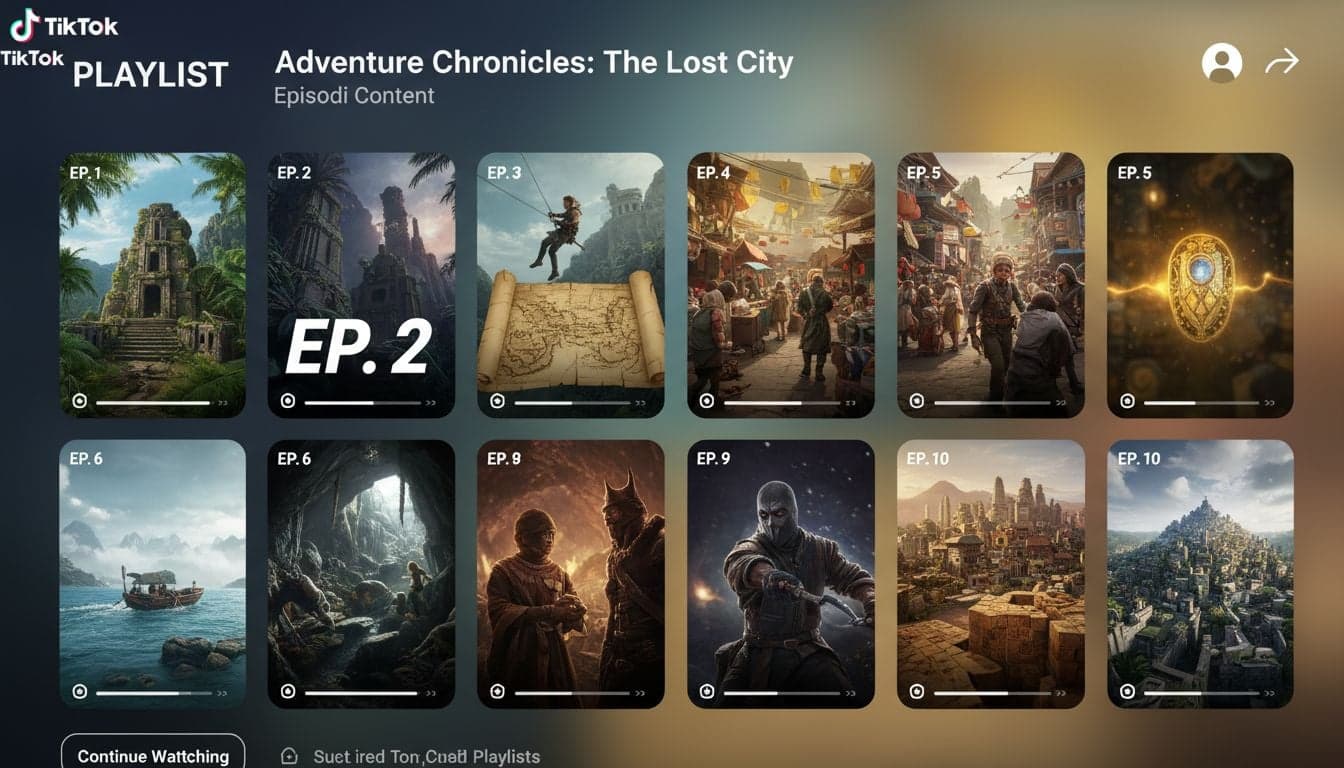
Forgetting to cross-promote: Reference other episodes in your captions, pin comments with episode lists, and use TikTok's playlist feature to organize your series.
Scaling Multiple Series Simultaneously
Advanced creators run 2-3 series concurrently, each targeting different audience segments or interests. With AI video generation, this becomes manageable:
Create distinct templates in Vexub for each series—different image styles, voices, or visual themes. This prevents audience confusion and allows you to test which series resonates most strongly. You might run:
A daily micro-series (30-second quick facts, posted every day)
A weekly deep-dive series (60-second detailed explanations, posted every Monday)
A trending response series (reacting to viral topics in your niche, posted opportunistically)
Monitor each series independently. Often one will significantly outperform others—that's your signal to double down on production for that format while maintaining the others at lower frequency.
Turning Series Content Into a Following Machine
The ultimate goal of TikTok series content isn't just views—it's converting casual viewers into dedicated followers who anticipate your next upload. Track these metrics to measure series success:
Follow-through rate: What percentage of viewers who watch episode 1 return for episode 2? Aim for 30%+ in the first week.
Series completion rate: Do viewers who discover your series watch multiple episodes in one session? This indicates strong format appeal.
Comment patterns: Are viewers discussing previous episodes, predicting future topics, or requesting specific content? This engagement signals investment.
Profile visit conversion: Series content should drive 15-25% higher profile visit rates than standalone content because viewers want to see all episodes.
The creators who master series content using AI tools like Vexub aren't just posting videos—they're building content ecosystems that work 24/7 to attract, engage, and convert their ideal audience. Your series becomes your brand, your calling card, and your growth engine.
Ready to build your first TikTok series? Check out our guide on TikTok video ideas for 2026 to spark your series concept, then use Vexub to automate the production pipeline that turns one good idea into 100+ consistent, high-performing episodes.