TikTok story format has become the platform's most powerful engagement tool. Videos that tell compelling stories keep viewers watching 3-5x longer than standard content, and the algorithm rewards this retention with exponential reach. The challenge: creating story-driven content consistently takes hours of planning and editing.
AI-generated narrative videos solve this problem by automating the storytelling process while maintaining the structure that makes story format so effective. The result is content that hooks viewers in the first second, builds tension throughout, and delivers a satisfying payoff that drives shares and follows.
This guide breaks down the exact formula for TikTok story format and shows you how to replicate it using AI tools that generate complete narrative videos from simple prompts.
Why TikTok Story Format Dominates the Algorithm
Story videos outperform other content formats because they exploit TikTok's core ranking factor: watch time percentage. When viewers watch your entire video, the algorithm interprets this as high-quality content and pushes it to more feeds.
The data shows the impact clearly. Videos using story structure achieve 67% average watch time compared to 31% for standard content. This difference translates directly to views: a video with 70% retention typically reaches 8-12x more people than one with 30% retention.
Hook effectiveness: Story format videos get 89% of viewers past the 3-second mark versus 42% for non-story content.
Completion rates: Narrative structure increases full-video views by 214% on average.
Share metrics: Stories generate 3.7x more shares because viewers want to see how others react to the twist or conclusion.
The most successful TikTok creators understand this formula and apply it to every video. Whether they're telling true crime stories, sharing relationship anecdotes, or revealing historical facts, the underlying structure remains consistent.
The Core Elements of TikTok Story Format
Every effective TikTok story follows a three-part structure that mirrors traditional storytelling but compressed into 30-90 seconds. Understanding these elements lets you replicate the format across any niche.
The Hook (Seconds 0-3)
Your opening must create immediate curiosity or tension. The best hooks either pose a question, make a shocking statement, or show a high-stakes moment without context. Viewers need a reason to keep watching before they even process what your video is about.
"I found out my roommate was secretly..." (creates mystery)
"This decision cost me $50,000" (implies dramatic story)
"Nobody believed me until I showed them proof" (promises payoff)
The hook works because it creates an information gap — viewers must watch to close the gap between the question raised and the answer provided.
The Build (Seconds 3-60)
This section develops the narrative through escalating details. Each sentence should add new information that raises stakes or deepens intrigue. The key is pacing: reveal enough to maintain interest without giving away the conclusion.
Strong build sections use specific details rather than vague descriptions. Instead of "something strange happened," effective stories say "the door opened by itself at exactly 3:17 AM." Specificity creates believability and mental imagery.
Establish context quickly (who, where, when in 5-8 seconds)
Introduce the complication or unusual element
Show failed attempts or mounting tension
Add a secondary twist or complication
Build to the moment of resolution
The Payoff (Final 10-15 Seconds)
The conclusion delivers the answer, revelation, or outcome that the hook promised. The best payoffs either subvert expectations with an unexpected twist or exceed expectations by being more dramatic than anticipated.
After the payoff, successful story videos often add a brief call-to-action: "Follow for part 2," "Comment if this happened to you," or "Share this with someone who needs to see it." This converts the engagement from the story into measurable actions that further boost algorithmic performance.
Create videos like this with AI
Script, voiceover, images and subtitles — automated in minutes.
Creating Story Format Videos with AI
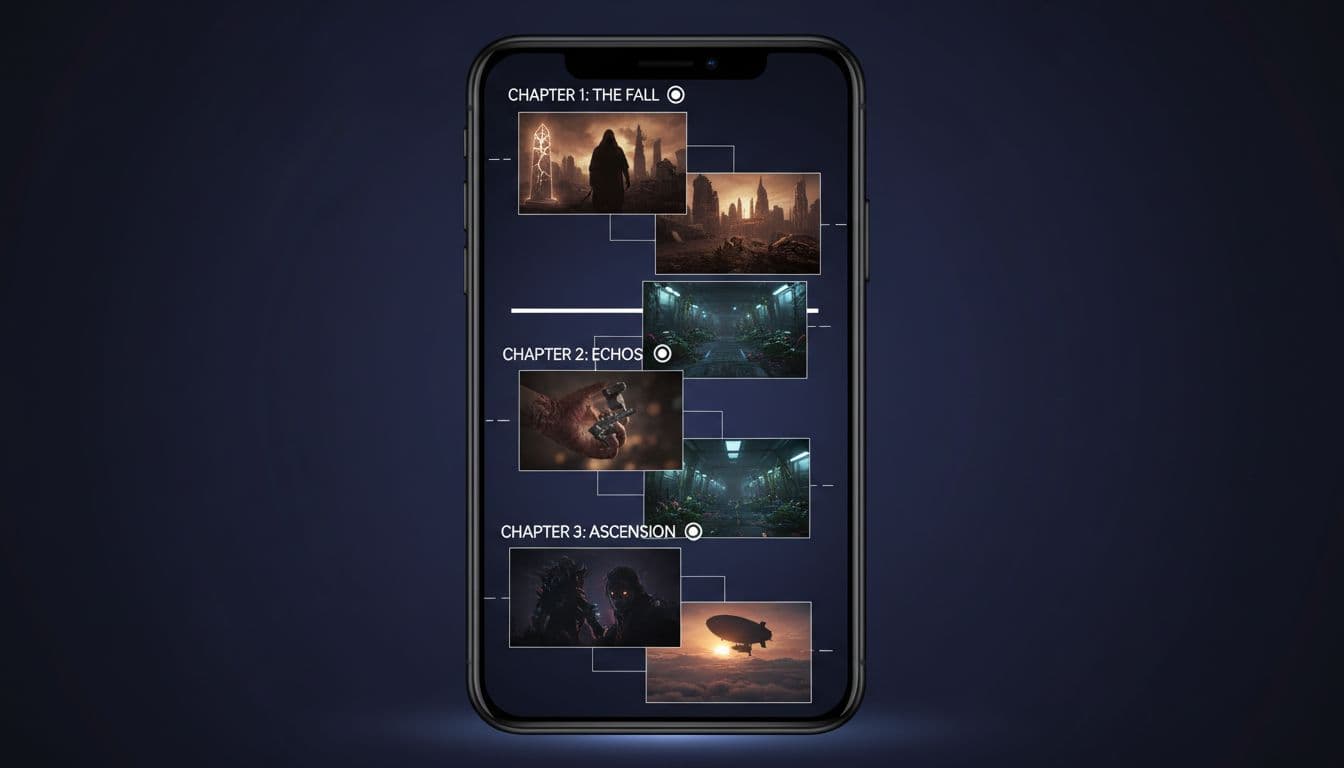
Using AI video generators like Vexub lets you produce story-driven content at scale without sacrificing quality. The process involves structuring your prompt to include the three story elements, then letting the AI generate appropriate visuals and pacing.
Prompt Structure for Narrative Videos
The most effective prompts for story format videos follow this template:
Example prompt: "Tell the story of a person who accidentally bought a haunted mirror at a yard sale. Start with them noticing their reflection moving independently. Build tension as strange things happen in their home. Reveal that the mirror shows the future, not the past. Eerie, mysterious tone with dramatic pacing."
This prompt structure gives the AI clear narrative direction while leaving room for creative visual interpretation. The emotional tone specification ensures the generated visuals match the story's mood.
Visual Storytelling Techniques
Story format doesn't rely solely on narration — the visuals must advance the narrative. AI video tools excel at creating imagery that matches story beats when you specify key visual moments in your prompt.
Scene transitions: Direct the AI to change scenes at major story shifts ("Show a close-up of the diary, then zoom out to reveal the abandoned house").
Visual metaphors: Use symbolic imagery to represent abstract concepts ("As the character realizes the truth, show cracking glass or opening doors").
Pacing through visuals: Fast cuts during action sequences, slower transitions during revelatory moments.
Vexub's scene-by-scene generation allows you to control exactly how the story unfolds visually, ensuring each frame supports the narrative rather than just providing generic background.
Niche-Specific Story Format Applications
The story format adapts to any TikTok niche, but the implementation varies based on content type. Here's how to apply narrative structure across popular categories:
Educational Content
Educational stories work by framing facts within a narrative. Instead of "Here are 5 facts about ancient Rome," the story version begins: "Archaeologists found a letter that revealed the real reason Rome fell, and it's not what history books say."
The build section presents the facts as clues building toward the revelation. The payoff delivers the counterintuitive truth or connects disparate facts into a cohesive narrative.
Horror and Mystery
Horror storytelling on TikTok relies on atmospheric buildup and effective sound design. AI-generated horror videos benefit from specifying lighting ("dim, flickering lights"), camera angles ("low angle looking up at a shadowy figure"), and progression of dread.
The most effective horror stories on TikTok leave something to imagination. Rather than showing everything, they imply the scariest elements through reaction shots or environmental details. Learn more about creating faceless horror content with AI tools.
Personal Anecdotes
Personal story videos require authentic tone even when AI-generated. The key is writing scripts in conversational first-person and specifying that visuals should feel candid rather than polished.
Successful anecdote videos often include small, relatable details that make the story feel genuine: "I was eating leftover pizza at 2 AM when..." These specific details create connection with viewers who recognize the mundane reality within the dramatic story.
Optimizing Story Videos for Maximum Retention
Creating story structure is half the equation — optimizing the technical elements ensures viewers actually watch through to the payoff. These adjustments can increase retention by 20-40% without changing the core narrative.
Subtitle Timing and Pacing
Subtitles guide viewer attention and control pacing. Each subtitle should display for exactly as long as it takes to read comfortably plus 0.5 seconds. Too fast creates stress, too slow creates boredom.
Highlight key words in different colors to emphasize important story beats: shocking revelations in red, emotional moments in yellow, crucial details in bold white. This visual hierarchy keeps viewers engaged even when multitasking.
Sound Design for Narrative Flow
Background music should shift to match story progression. Start with neutral or mysterious music during the hook, build intensity during complications, and peak during the revelation. Silence or music drops can create powerful moments when used strategically.
AI voiceovers need proper emotional inflection. When generating narration, specify tone shifts: "Excited during the discovery, hesitant during the decision, triumphant at the resolution." These vocal variations signal narrative progression to viewers even before they process the words.
Strategic Pacing Adjustments
Story videos should accelerate as they progress. The hook can take 3-4 seconds, but the build section should increase pace, and the final revelation should feel rapid and decisive.
Trim pauses between sentences to 0.3-0.5 seconds in the build section
Use faster visual transitions in the final third of the video
Increase subtitle appearance speed by 15% after the midpoint
This accelerating rhythm creates momentum that pulls viewers to the conclusion. The fastest content creators generate and test 3-4 pacing variations of each story to find the version with highest retention.
Common Story Format Mistakes to Avoid
Even well-structured narratives fail when execution errors break the immersion. These mistakes appear in 60%+ of underperforming story videos:
Spoiling the payoff in the hook: Your opening should create curiosity, not answer the question immediately. "I can't believe this happened" is better than "I can't believe I won the lottery."
Meandering middle sections: Every sentence in the build must advance the story. Cut anything that doesn't escalate tension or add crucial context.
Anticlimactic endings: The payoff must feel earned and significant. If viewers think "that's it?" you've lost future engagement.
Mismatched visuals: When the narration describes a tense moment but the visuals show cheerful imagery, it breaks immersion and tanks retention.
The most successful creators review their videos specifically looking for these breaks in narrative flow, fixing them before publishing rather than after poor performance.
Scaling Story Content Production
The creators dominating TikTok with story format post 2-3 narrative videos daily. This volume requires systematic production that balances quality with speed.
AI tools make this scale achievable by handling the time-intensive parts: visual generation, scene matching, subtitle timing, and audio mixing. Your focus shifts to the creative elements that AI can't fully replicate: story structure, hooks, and emotional pacing.
A sustainable workflow looks like this: spend 30 minutes writing 5-7 story scripts, batch generate the videos over the next hour, then spend 15 minutes per video making final adjustments and adding platform-specific optimizations. This produces professional story content in 2-3 hours instead of 8-10 hours of manual editing.
To maximize your story content strategy, combine this format with proven viral tactics that compound your reach beyond what algorithm optimization alone can achieve.
Measuring and Improving Story Performance
Track these specific metrics to identify which story elements resonate with your audience:
Hook retention rate: Percentage of viewers who watch past 3 seconds. Target: 75%+
Midpoint retention: Viewers remaining at the 50% mark. Target: 60%+
Completion rate: Full video views. Target: 45%+ for story format
Share rate: Shares per 1000 views. Target: 15+ for compelling stories
When a story video underperforms, analyze exactly where viewers drop off. If 60% leave at the 8-second mark, your hook isn't delivering enough intrigue. If they leave at 85%, your payoff disappointed expectations.
Use this data to refine your formula. The best story creators maintain spreadsheets tracking hook types, story structures, and performance metrics, then double down on patterns that consistently outperform.
TikTok story format rewards creators who understand human psychology and platform mechanics equally. Master the narrative structure, use AI to handle production complexity, and focus your creative energy on crafting hooks and payoffs that viewers can't scroll past. The combination produces content that satisfies both audience and algorithm, creating sustainable growth through genuine engagement.