Artificial intelligence is revolutionizing the way educational institutions create and deliver content. As we move further into 2026, it's clear that AI video strategies are not just a trend but a necessity for engaging students and enhancing learning experiences.
Video content powered by AI allows educators to craft more personalized and interactive materials. This transformation is pivotal for institutions aiming to stay competitive and meet the evolving expectations of tech-savvy students.
Why AI Video Strategies Matter in Education
AI video strategies are reshaping education by providing tools that enhance both teaching efficiency and student engagement. These strategies enable the creation of personalized learning experiences that cater to individual student needs.
For instance, AI can analyze student interactions with video content to adapt the material in real-time, offering a tailored educational journey. This capability is especially beneficial in distance learning environments, where maintaining student engagement is crucial.
Moreover, AI-driven analytics can help educators understand which parts of their videos are most effective, providing insights that can be used to refine future content.
Creating Engaging Educational Videos with AI
Incorporating AI into video production can significantly reduce the time and effort required to create high-quality educational content. AI tools can automate editing processes, add subtitles, and even suggest improvements to enhance clarity and engagement.
With platforms like Vexub, educators can easily create interactive videos that include quizzes, polls, and embedded links, transforming passive watching into an active learning process. These features encourage students to engage more deeply with the material.
Additionally, AI tools can generate realistic simulations and visualizations, making complex subjects more accessible and understandable. This capability is particularly useful in fields such as science and engineering.
Implementing AI Video Strategies: A Step-by-Step Guide
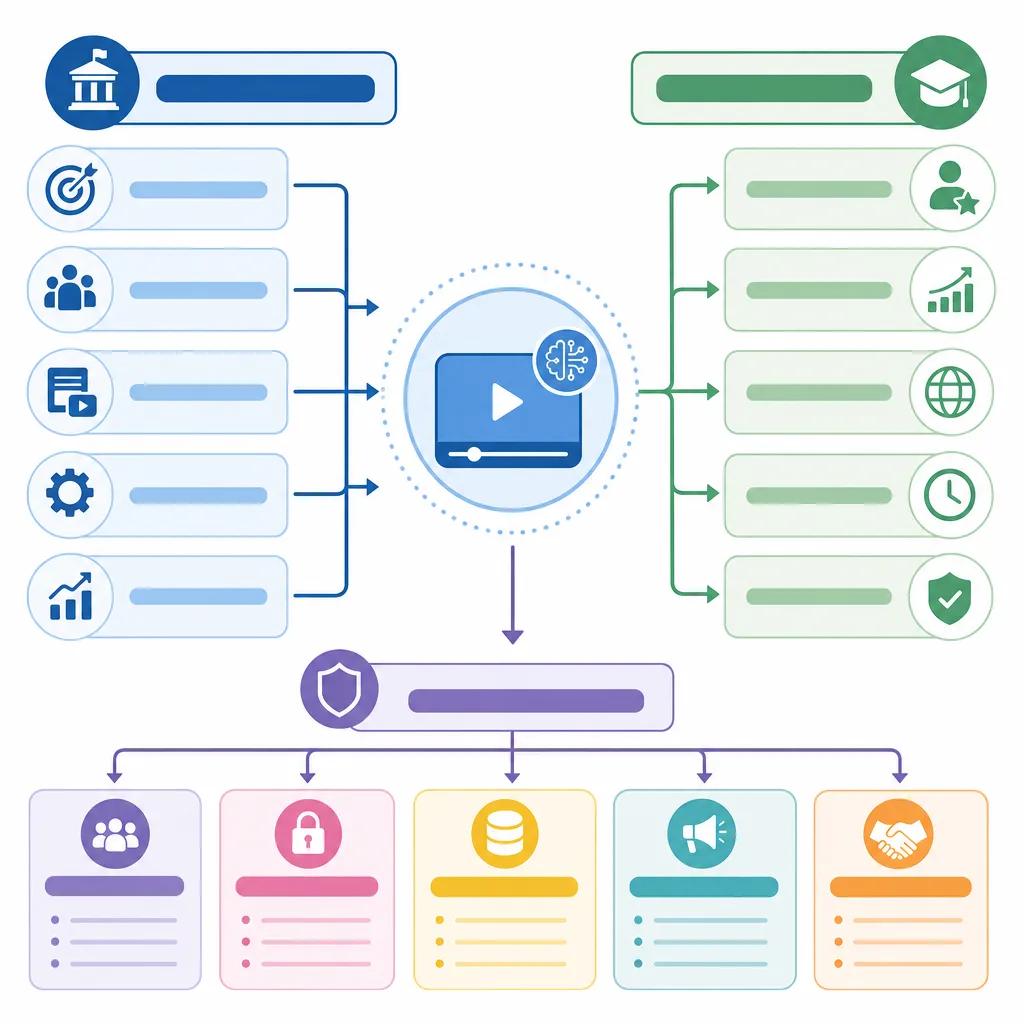
To successfully implement AI video strategies, educational institutions should start with a clear plan. Begin by identifying the specific educational goals you aim to achieve using AI video tools.
Next, choose the right tools that align with those goals. Consider platforms like Vexub, which offer user-friendly interfaces and comprehensive features tailored for educational content creation.
Once the tools are selected, train your staff to use them effectively. Provide workshops or training sessions to ensure that your team can maximize the potential of AI in video production.
Developing Content with AI
When developing content, leverage AI's ability to process large volumes of data. Use AI analytics to gather insights into student preferences and learning patterns, tailoring your video content accordingly.
AI can also assist in generating content ideas by analyzing current educational trends and gaps in existing materials. This can help educators stay ahead of the curve and provide relevant, up-to-date information.
Create videos like this with AI
Script, voiceover, images and subtitles — automated in minutes.
Overcoming Challenges in AI Video Production
Despite the benefits, implementing AI video strategies can present challenges. Common obstacles include technical issues, resistance to change from staff, and budget constraints.
To overcome these challenges, start with small pilot projects to demonstrate the value of AI tools. This approach can help in gaining buy-in from stakeholders by showcasing tangible benefits.
Additionally, ensure robust support systems are in place to address any technical issues that may arise. Consider partnering with AI specialists or platforms like Vexub for ongoing support and expertise.
Addressing Ethical Considerations
As with any technology, ethical considerations must be addressed. Ensure that the use of AI in video production complies with data privacy regulations and that student data is used responsibly.
Promote transparency by informing students about how AI is used in their learning process. This openness can enhance trust and acceptance of AI tools among students.

Future Trends in AI Video for Education
Looking ahead, AI video strategies will continue to evolve, offering even more advanced features and capabilities. One emerging trend is the use of virtual reality (VR) and augmented reality (AR) in educational videos, providing immersive learning experiences.
AI's role in personalizing education will also expand, with more sophisticated algorithms capable of predicting student performance and adapting content in real-time. This level of personalization can significantly enhance learning outcomes.
Furthermore, the integration of AI with other technologies, such as the Internet of Things (IoT), will open new possibilities for interactive and connected learning environments.
Conclusion: The Path Forward for Educational Institutions
AI video strategies offer a powerful means to revolutionize education by enhancing content delivery and student engagement. By embracing these technologies, educational institutions can provide more effective and engaging learning experiences.
Platforms like Vexub make it easier than ever to implement these strategies, offering tools that cater specifically to the needs of educators. As AI continues to advance, the potential for innovation in educational videos is boundless.
For more insights on leveraging AI in educational content, explore our guides on ", using AI for educational podcasts, " and ", creating educational YouTube Shorts, ". Additionally, learn about ", AI video tools for school marketing, " to maximize your institution's outreach.