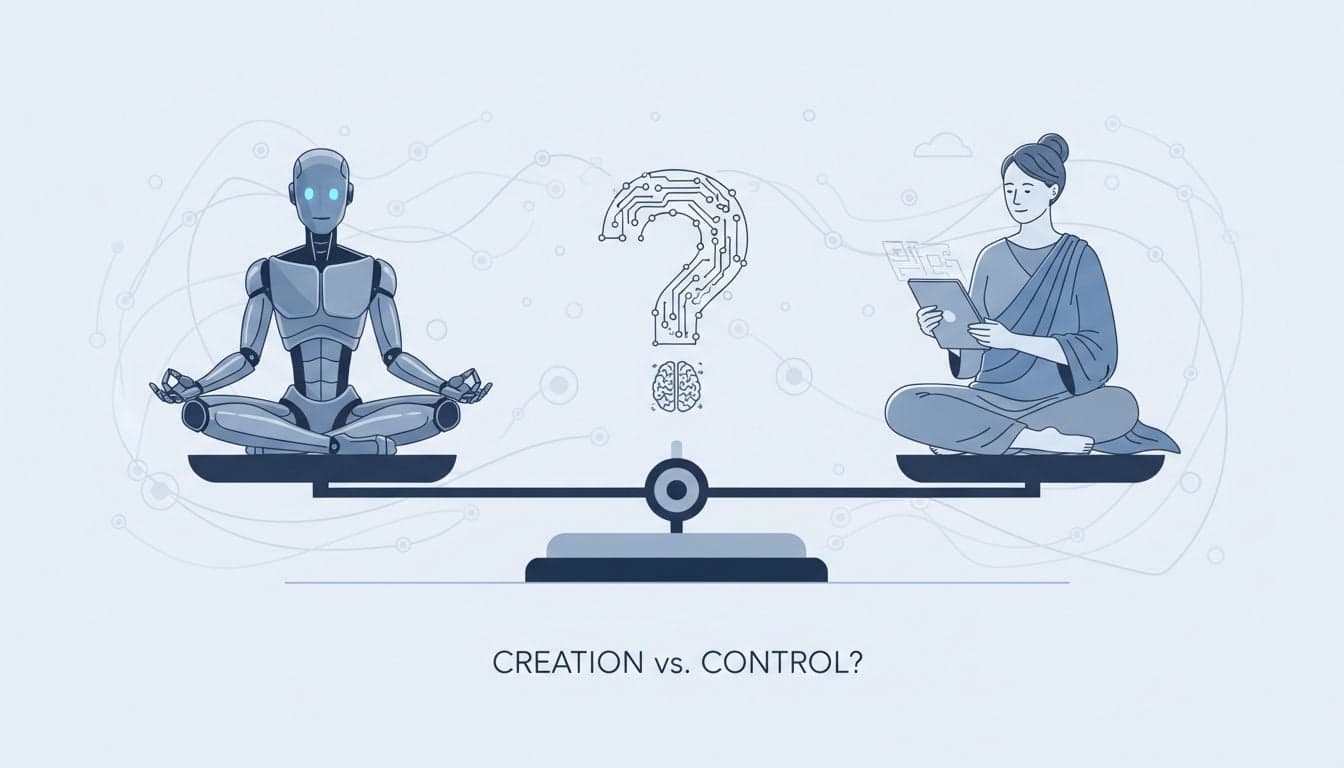
AI video generation has democratized content creation, enabling anyone to produce professional-quality videos in minutes. This accessibility brings unprecedented creative freedom, but it also introduces complex ethical questions that every creator must address. The choices you make today shape how audiences perceive AI-generated content tomorrow.
The rapid advancement of AI video tools like Vexub has outpaced regulatory frameworks, leaving creators to navigate uncharted ethical territory. While the technology continues to evolve, the fundamental principles of responsible creation remain constant: transparency, authenticity, and respect for your audience's trust.
Understanding your responsibilities as a creator isn't just about avoiding legal pitfalls. It's about building sustainable, trustworthy channels that audiences want to support and platforms want to promote.
Transparency and Disclosure Requirements
Honesty about AI usage forms the foundation of ethical content creation. Audiences deserve to know when they're consuming AI-generated material, and platforms increasingly require explicit disclosure. The Federal Trade Commission has begun scrutinizing AI-generated content, particularly in advertising and sponsored posts.
Platform-specific requirements vary significantly. YouTube's updated policies mandate disclosure of realistic AI-generated content that viewers might mistake for real footage. TikTok requires creators to label synthetic media including AI voices and deepfakes. Instagram recommends transparency tags for AI-assisted content, though enforcement remains inconsistent.
Clear verbal disclosure: State 'This video was created using AI' in your opening or description.
Visual watermarks: Add subtle AI indicators to video corners or end cards.
Description transparency: Include specific tools used (e.g., 'Created with Vexub AI video generator').
Pinned comments: Address AI usage directly in top comments for community transparency.
Strategic disclosure doesn't diminish your content's value. Many successful creators have built audiences specifically around AI-generated content by being upfront about their process. Your honesty becomes a differentiator in an increasingly crowded market.
When Disclosure Becomes Legally Required
Three scenarios trigger mandatory disclosure regardless of platform policies. First, any content presented as factual news or documentary material requires explicit AI labels. Second, sponsored content or advertisements using AI-generated elements must disclose both the sponsorship and AI usage. Third, content featuring recognizable individuals—whether through voice cloning or visual generation—demands clear synthetic media warnings.
The European Union's AI Act, effective in phases through 2027, establishes criminal penalties for undisclosed AI-generated content that mimics real people or events. Similar legislation is advancing in California, New York, and other jurisdictions. Proactive disclosure protects you from future liability as regulations tighten.
Avoiding Misinformation and Deepfakes
AI video generators can produce remarkably realistic content, making the line between creative expression and misinformation dangerously thin. Your ethical responsibility extends beyond legal compliance to actively preventing harm through misleading content.
The 2025 election cycle saw unprecedented deepfake proliferation, with AI-generated videos of political figures spreading false information. While your content may seem harmless, context collapses online. A satirical AI video can be recontextualized and shared as genuine footage, potentially causing real-world consequences.
Educational and commentary content using AI-generated representations requires additional safeguards. Frame these clearly as hypothetical scenarios or artistic interpretations. Consider overlaying 'AI SIMULATION' watermarks throughout the video, not just in opening frames.
Fact-check AI-generated scripts: AI can confidently state false information. Verify all factual claims before publishing.
Avoid news mimicry: Don't replicate news broadcast formats for fictional content.
Date-stamp speculative content: Clearly mark predictions or future scenarios as such.
Provide context immediately: Don't bury disclaimers at video end—viewers may share clips without context.
Respecting Intellectual Property and Copyright
AI training data raises complex copyright questions that creators must navigate carefully. Most AI video platforms, including Vexub, train on publicly available data, but this doesn't automatically grant you rights to reproduce specific copyrighted styles, characters, or branded elements in your generated content.
The ongoing legal battles between content creators and AI companies will eventually establish clearer precedents. Until then, exercise caution when generating content that closely mimics identifiable creative works. Prompting an AI to replicate a specific animator's distinctive style or a copyrighted character's likeness creates legal exposure.
Safe Practices for AI-Generated Content
Use original prompts: Create unique concepts rather than copying existing IP. 'A dragon flying over mountains' is safer than 'Toothless from How to Train Your Dragon.'
Avoid trademarked elements: Don't include recognizable logos, brand names, or corporate mascots in generated visuals.
License stock assets separately: If supplementing AI content with stock footage or music, obtain proper licenses.
Credit inspiration appropriately: If your concept builds on someone else's idea, acknowledge it in your description.
Copyright applies equally to AI-generated music and voiceovers. While Vexub provides royalty-free audio options, using AI to clone specific artists' voices without permission violates both copyright and personality rights in most jurisdictions. The recent lawsuits against AI voice cloning services have established that vocal likeness deserves the same protection as visual likeness.
Create videos like this with AI
Script, voiceover, images and subtitles — automated in minutes.
Authenticity and Audience Trust
The long-term sustainability of your channel depends on maintaining audience trust. AI-generated content isn't inherently less authentic than traditionally produced videos, but it requires intentional authenticity in how you present yourself and your creative process.
Viewers distinguish between AI-assisted creation and fully automated content farms. The difference lies in your genuine creative input. Channels that simply batch-generate trending topics with minimal human oversight struggle to build loyal audiences, while creators who use AI as one tool in a broader creative process maintain strong engagement.
Share your creative process openly. Explain why you chose AI generation for specific elements. Discuss your prompt engineering, editing decisions, and quality control measures. This transparency transforms AI from a suspicious shortcut into a legitimate creative tool in viewers' perception.
Show your work: Create behind-the-scenes content explaining your AI workflow and creative decisions.
Respond to comments: Engage authentically with viewers who ask about your AI usage.
Admit mistakes: If AI generates inaccurate information, correct it promptly and transparently.
Add personal perspective: Inject your unique viewpoint, analysis, or commentary into AI-generated content.
The most successful AI content creators understand that technology amplifies their voice rather than replacing it. Your audience follows you for your perspective, humor, or expertise—AI simply helps you deliver that value more efficiently.
Cultural Sensitivity and Representation
AI video generators inherit biases from their training data, potentially perpetuating stereotypes or cultural insensitivity in generated content. As a creator, you're responsible for reviewing and correcting these issues before publishing.
Generated content featuring diverse cultures, religions, or ethnic groups requires careful scrutiny. AI models trained primarily on Western media may default to stereotypical representations. A prompt for 'traditional Japanese setting' might generate cliched imagery that Japanese creators would find reductive or offensive.
Language matters deeply in AI-generated scripts and voiceovers. AI may confidently use outdated terminology or offensive language without recognizing the harm. Review every script with sensitivity to evolving language standards around disability, gender, race, and other identity factors.
Accessibility represents another crucial ethical dimension. AI-generated videos should include accurate captions, audio descriptions, and other accommodations. Vexub's automatic subtitle generation helps creators meet accessibility standards, but human review ensures caption accuracy and timing.
Environmental and Resource Considerations
Large-scale AI video generation consumes significant computational resources and energy. While individual creators can't solve AI's environmental impact alone, understanding these implications informs responsible usage patterns.
A single minute of AI-generated high-resolution video requires approximately 5-10 kilowatt-hours of energy—equivalent to running a household air conditioner for several hours. Multiplied across millions of generated videos daily, the aggregate environmental impact becomes substantial.
Responsible practices include generating content purposefully rather than experimenting endlessly with minor variations. Plan your content requirements before starting generation. Batch similar videos to optimize resource usage. Delete unused generated content rather than accumulating unnecessary files.
Optimize generation settings: Use lower resolution for draft reviews before generating final versions.
Reuse generated assets: Build a library of AI-generated B-roll for multiple projects.
Purposeful iteration: Refine prompts thoughtfully rather than generating dozens of similar variations.
The Future of AI Content Ethics
Ethical frameworks for AI-generated video will evolve rapidly as technology advances and society adapts. The principles outlined here provide current guidance, but creators must stay informed about emerging standards and regulations.
Several industry initiatives are developing AI content standards. The Partnership on AI and the Content Authenticity Initiative are creating technical standards for content provenance—metadata that tracks AI generation and modifications throughout a video's lifecycle. Early adoption of these standards demonstrates your commitment to responsible creation.
Expect platforms to implement more sophisticated AI detection and labeling systems. YouTube has tested automated AI content detection since 2025. TikTok's algorithm increasingly prioritizes transparent AI disclosure in its recommendation system. Creators who establish ethical practices now will adapt more easily as requirements tighten.
The relationship between AI and human creativity will continue shifting. As explored in our analysis of AI's future in video creation, successful creators will distinguish themselves through how they apply AI tools rather than simply using them. Ethical practices become competitive advantages as audiences grow more sophisticated about AI content.
Building an Ethical AI Content Practice
Implementing ethical AI video creation doesn't require abandoning the efficiency and creativity that attracted you to these tools. It means developing thoughtful workflows that prioritize transparency, accuracy, and respect for your audience.
Start by establishing personal content guidelines beyond platform minimums. Define what types of AI-generated content align with your values and brand. Document your disclosure practices consistently. Review generated content critically before publishing, asking whether it could mislead, harm, or misrepresent.
Join creator communities focused on responsible AI usage. Share knowledge about emerging ethical challenges and solutions. The comparison of AI versus human voiceovers illustrates how thoughtful creators balance efficiency with authenticity—principles that extend across all AI content decisions.
Remember that ethical creation ultimately serves your long-term success. Audiences reward transparency with loyalty. Platforms promote content that meets high standards. Regulators target bad actors while supporting responsible innovation. By treating AI video ethics as foundational rather than optional, you build a sustainable content practice positioned for whatever changes the future brings.