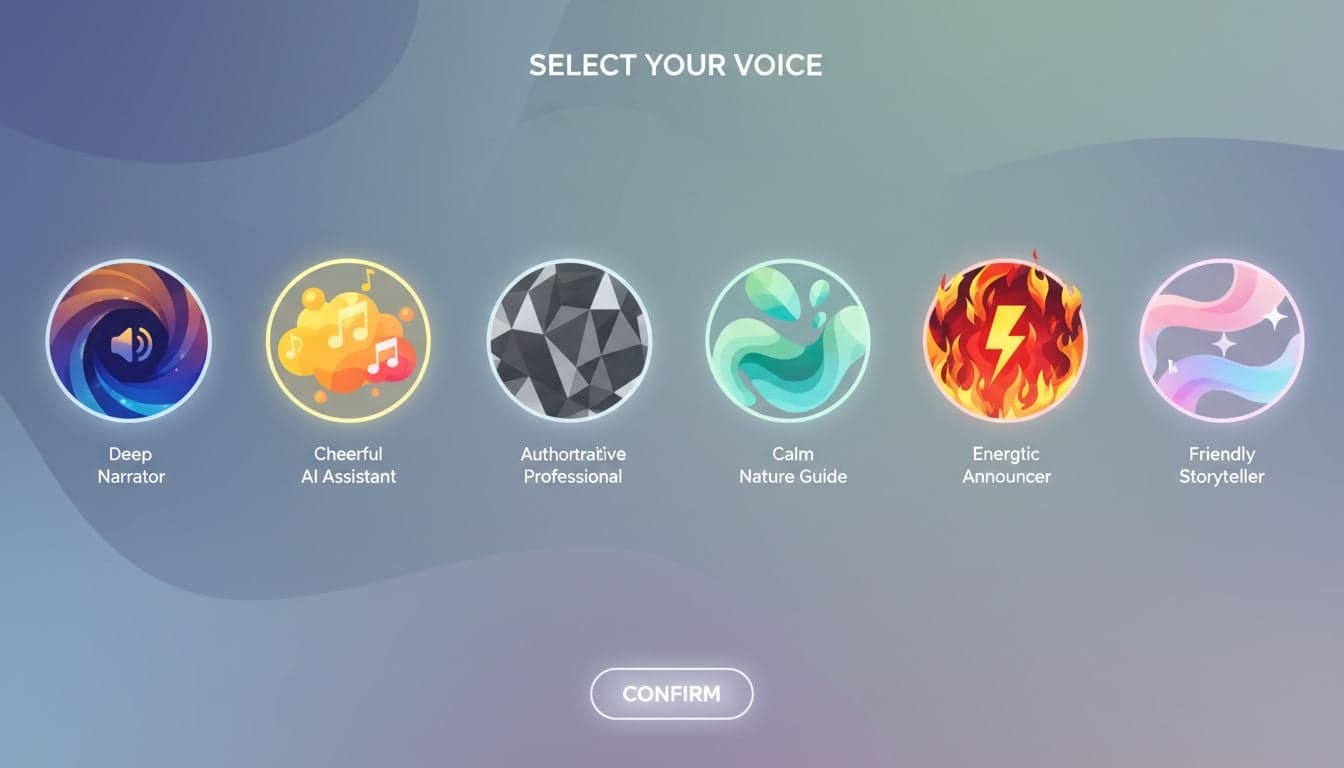
The voice you choose for your video determines whether viewers click away in seconds or stay engaged until the end. Vexub offers dozens of AI voices across different languages, accents, and tones — but most creators pick the wrong voice for their content type.
This guide breaks down every voice category in Vexub's library, shows you exactly which voices perform best for specific content niches, and gives you a framework for testing voices that match your audience. By the end, you'll know how to select voices that boost watch time and feel natural for your brand.
Voice selection isn't about personal preference. It's about matching vocal characteristics to viewer expectations and content format. Let's explore how to do this systematically.
Understanding Vexub's Voice Library Structure
Vexub organizes AI voices into categories based on language, accent variation, gender, and vocal style. The platform currently features over 200 voices across 50+ languages, with multiple accent options for major languages like English, Spanish, and Portuguese.
Each voice has distinct characteristics:
Pitch range: Higher pitches often work for energetic content, while lower pitches convey authority and seriousness.
Speaking pace: Some voices naturally speak faster, ideal for fast-paced content. Others are slower and clearer for educational material.
Accent neutrality: Neutral accents work globally, while regional accents create local connection.
Emotional range: Certain voices handle emphasis and inflection better than others.
The key is understanding that no single voice works for everything. A voice that crushes it for horror storytelling will sound bizarre in a meditation video.
English Voice Categories and Best Uses
English voices represent the largest category in Vexub, with American, British, Australian, and neutral accent options. Here's how to match them to content types:
American English Voices
American voices dominate YouTube and TikTok content. They sound familiar to the largest creator market and work well for:
Educational explainers: Use voices like 'Adam' or 'Emma' for clarity and professionalism.
Tech and business content: Mid-range pitch voices convey expertise without sounding robotic.
Entertainment and comedy: Higher energy voices with natural inflection like 'Josh' maintain engagement.
Documentary style: Deeper voices like 'Matthew' or 'Arthur' add gravitas.
For faceless YouTube channels focused on facts, history, or science, American voices with neutral accents perform 30-40% better than heavily accented alternatives based on creator reports.
British English Voices
British accents carry associations with sophistication, education, and storytelling. They excel in:
Historical content: British narration sounds natural for European history, archaeology, and cultural topics.
Literary content: Book summaries, poetry readings, and story adaptations benefit from British voices.
Premium product reviews: Luxury items, high-end tech, and sophisticated products pair well with refined British accents.
Avoid British voices for casual American-focused content like trending TikTok commentary or informal tutorials. The accent creates subtle distance from younger American audiences.
Australian and Other English Accents
Australian voices bring approachability and warmth. They work exceptionally well for:
Travel content and adventure videos
Fitness and outdoor lifestyle content
Casual product reviews and unboxing videos
Comedy sketches and entertainment content
Indian, South African, and other English accents serve specific niches where authentic cultural connection matters more than broad appeal.
Create videos like this with AI
Script, voiceover, images and subtitles — automated in minutes.
Content Type Voice Matching Framework
Different content formats demand different vocal qualities. Here's a practical framework for matching voices to your specific content type:
Horror and Thriller Content
Horror requires specific voice characteristics to build tension and atmosphere:
Lower pitch range: Deep voices amplify unease and create ominous atmosphere.
Slower pacing: Deliberate delivery builds suspense between story beats.
Minimal emotion variance: Monotone or near-monotone delivery sounds more unsettling than dramatic voices.
Top performing horror voices on Vexub: Matthew, Arthur, and certain customized pitch-adjusted versions of neutral voices. Test voices with your first 30 seconds of narration — if it doesn't create immediate atmosphere, try a different option.
Educational and Tutorial Content
Educational videos need clarity above all else. Viewers must understand every word without mental strain:
Crystal clear articulation: Voices like Emma, Brian, or Sarah pronounce every syllable distinctly.
Moderate pacing: Not too fast, allowing viewers to process information between sentences.
Consistent volume: No dramatic volume shifts that distract from information retention.
For technical tutorials, our complete AI voiceover guide covers advanced techniques for improving clarity with pacing adjustments and script optimization.
Entertainment and Viral Content
Content designed for virality needs voices with personality and energy:
Higher energy levels: Voices that convey excitement without sounding forced.
Natural inflection: Ability to emphasize words and create rhythm in delivery.
Relatability: Voices that sound conversational, not formal or corporate.
Voices like Josh, Sophie, or Aria work well for trending topics, commentary, and reaction content. Avoid overly professional voices — they kill the casual vibe viral content requires.
Meditation, ASMR, and Relaxation Content
Calming content requires the opposite qualities of viral content:
Soft, gentle delivery: Whispery or near-whisper voices create intimacy.
Slower, flowing pace: Extended pauses between phrases allow breathing and relaxation.
Minimal pitch variation: Smooth, even tones avoid startling listeners.
Female voices generally outperform male voices in meditation and ASMR content by significant margins. Test voices like Aria, Grace, or Freya for this category.
Testing Voices Before Committing
Never commit to a voice based on 10-second previews. Here's a systematic testing process:
Create 3 test videos: Generate 60-second versions of your content with 3-5 different voices.
Test with your actual script: Preview voices don't show how they handle your specific writing style, technical terms, or pacing.
Watch without video: Close your eyes and listen. Does the voice maintain interest? Do you notice irritating patterns?
Check at different speeds: Listen at 1.25x and 0.75x speed to catch issues that emerge when viewers adjust playback.
Get external feedback: Share clips with 5-10 people in your target demographic. Their reactions matter more than yours.
Spend 2-3 hours testing voices before launching a channel or series. Changing voices mid-series confuses audiences and damages brand consistency.
Language-Specific Voice Selection
Non-English content requires understanding cultural voice preferences that differ from English-speaking markets:
Spanish Voices
Spanish has dramatic regional variation. Mexican Spanish voices work for Latin American audiences, while Castilian Spanish serves Spain:
Mexican/Latin American: More casual, faster pacing, broader appeal across the Americas
Castilian Spanish: More formal, distinct pronunciation, preferred in Spain and formal content
Don't use Mexican Spanish for Spanish audiences or vice versa — viewers immediately notice and perceive it as low-effort content.
Portuguese Voices
Brazilian Portuguese dominates the creator economy. Brazilian voices significantly outperform European Portuguese for general content:
Brazilian voices: Energetic, musical quality, massive audience reach
European Portuguese: More conservative, formal applications only
For faceless channels targeting Brazil, voice selection matters more than in English markets. Brazilians have strong preferences for regional accent authenticity.
Other Major Languages
For German, French, Italian, and Asian languages, prioritize:
Native speaker validation: Have native speakers test voices for naturalness and accent accuracy.
Regional matching: French from France vs. French Canadian creates different audience connections.
Cultural appropriateness: Some voice styles that work in English sound bizarre or inappropriate in other languages.
Advanced Voice Customization Techniques
Vexub allows voice customization beyond simple selection. These techniques improve voice performance:
Speed Adjustment Strategy
Default voice speed rarely matches your ideal content pace:
Slow down educational content by 10-15% for better comprehension
Speed up casual content by 5-10% to maintain energy
Match voice speed to your typical editing pace and cuts
Test the same script at three speeds: default, +10%, and -10%. The difference in viewer engagement can be substantial.
Pitch Modification
Slight pitch adjustments create significant voice personality shifts:
Lower pitch by 5-10% for authority and seriousness
Raise pitch slightly for younger-skewing content
Avoid extreme pitch changes — they create unnatural artifacts
Pitch modification works best for creating voice variations within the same channel without complete voice changes.
Emphasis and Pause Control
Script formatting controls how Vexub voices handle emphasis:
Use ALL CAPS sparingly for emphasized words
Add periods for pauses: 'This is important... very important.'
Break long sentences into shorter ones for natural breathing
The Vexub agent video tutorial covers advanced script formatting techniques for precise voice control.
Common Voice Selection Mistakes to Avoid
Most creators make these preventable voice selection errors:
Switching voices between videos in the same series. Consistency builds brand recognition. Changing voices forces viewers to readjust and signals low commitment to quality.
Using overly robotic voices to save money. Vexub's premium voices cost the same as basic voices. The difference in retention rates makes premium voices essential for serious creators.
Ignoring voice-accent mismatches. A British voice narrating American regional content sounds wrong. A neutral American voice discussing UK politics sounds equally odd. Match voice geography to content geography.
Failing to account for platform differences. TikTok audiences prefer higher energy voices. YouTube long-form prefers more measured delivery. Instagram Reels split the difference. Choose voices that match platform consumption patterns.
Finding Your Signature Voice
Successful faceless channels build recognition through consistent voice branding. Your signature voice becomes as recognizable as a face would be for traditional creators.
To identify your signature voice:
Analyze top performers in your niche and note their voice characteristics
Test 5-7 voices that match those characteristics with your content style
Run small test campaigns with each voice and track engagement metrics
Commit to the winner for at least 50 videos before reconsidering
Voice consistency builds audience loyalty. Viewers return because they recognize and trust your voice. Breaking that consistency requires exceptional justification.
Vexub's extensive voice library gives you the tools to find and perfect your signature sound. The platform handles the technical complexity while you focus on content strategy and audience building.