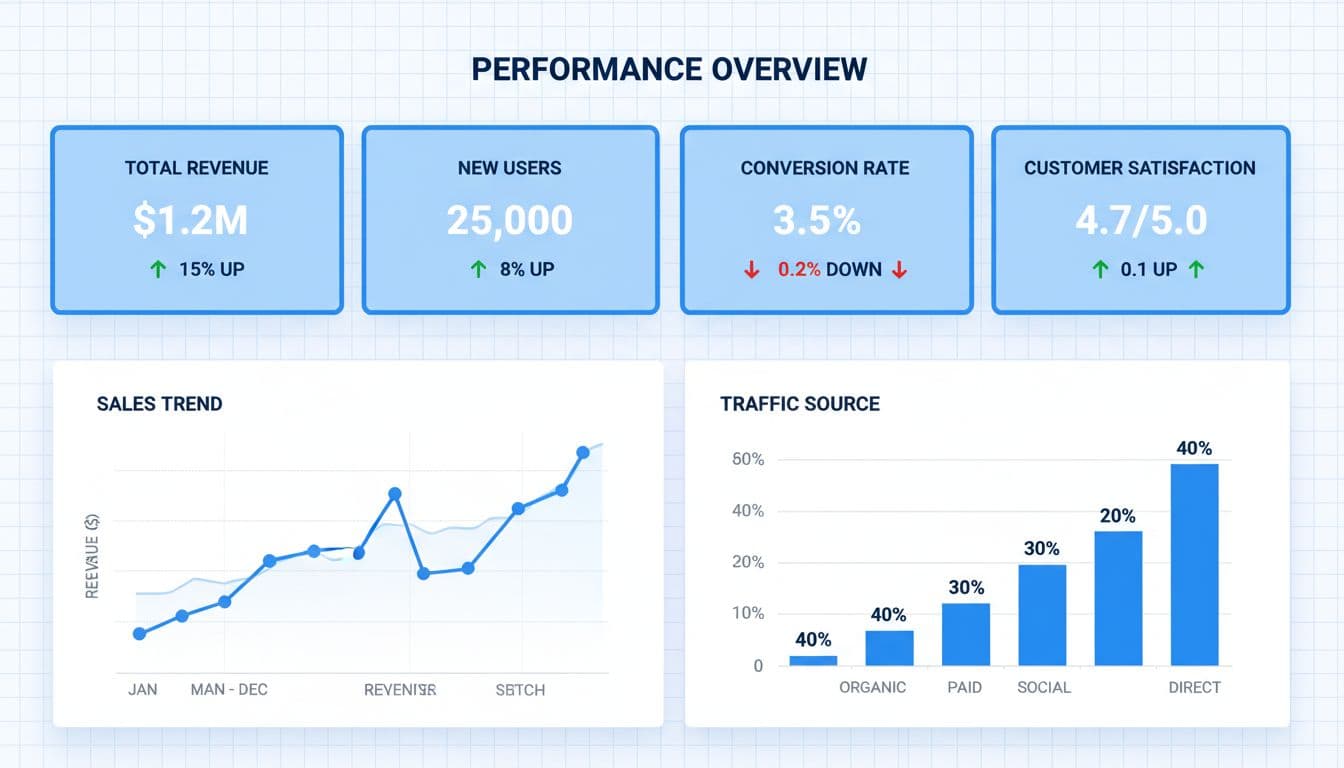
Your video gets 10,000 views. Success, right? Not necessarily. Without understanding the video analytics behind those views, you're flying blind. A video with 1,000 views and high engagement often outperforms a 10,000-view video with poor retention.
The difference between creators who grow and those who plateau isn't talent or luck—it's data literacy. The best creators obsess over their video performance metrics, using analytics to inform every decision from topic selection to thumbnail design.
This guide breaks down the 10 essential creator analytics you must track, what each metric reveals about your content, and how to use this data to accelerate your growth.
1. Watch Time: The King of YouTube Metrics
Watch time measures the total minutes viewers spend watching your content. YouTube's algorithm prioritizes this metric above all others because it directly correlates with platform engagement.
Why it matters: A video with 1,000 views and 8-minute average view duration (8,000 minutes total) signals higher quality to YouTube than a video with 5,000 views and 1-minute average view duration (5,000 minutes total).
Target benchmark: Aim for at least 50% average percentage viewed on videos under 10 minutes, 40% on longer content
Growth indicator: Increasing watch time month-over-month signals improving content quality
Optimization tip: Front-load your best content in the first 30 seconds to hook viewers immediately
Learn advanced techniques for maximizing this critical metric in our guide on YouTube watch time optimization with AI.
2. Click-Through Rate (CTR): Your First Impression Metric
CTR measures the percentage of people who click your video after seeing the thumbnail and title. This metric reveals how compelling your packaging is before anyone watches a second of your content.
Platform benchmarks:
YouTube: 2-10% is typical, with 4-6% being solid for most niches
TikTok: CTR matters less as content auto-plays in the feed
Instagram Reels: 3-8% for profile visits from Reels
What low CTR indicates: Your thumbnail and title aren't compelling enough or don't match what your target audience wants. Test variations with different visual hooks and title formulas.
What high CTR with low retention indicates: You're clickbaiting. Your packaging promises something your content doesn't deliver, damaging long-term channel trust.
3. Average View Duration: Quality Over Quantity
This video performance metric shows how long viewers stay engaged with your content. It's more revealing than total views because it measures actual interest.
A 10-minute video with 6-minute average view duration (60% retention) performs better algorithmically than a 3-minute video with 1.5-minute average view duration (50% retention), despite the same percentage.
Analyzing Drop-Off Points
Most analytics platforms show you exactly where viewers leave. Common drop-off points reveal specific issues:
0-10 seconds: Weak hook or misleading thumbnail/title
Mid-video: Pacing issues, repetitive content, or unfulfilled promises
Before end screens: Content resolved earlier than expected, or viewers already got their answer
Use these insights to restructure future videos and improve content pacing.
4. Audience Retention Graph: Your Content Report Card
The retention graph visualizes exactly when viewers lose interest. Spikes indicate compelling moments; valleys reveal where you lost them.
Flat retention (steady decline) suggests competent but unremarkable content. Spiky retention with re-watches indicates viral potential—viewers are rewatching specific moments.
Create videos like this with AI
Script, voiceover, images and subtitles — automated in minutes.
5. Traffic Sources: Understanding Discovery Patterns
Knowing where viewers find your content shapes your distribution strategy. YouTube metrics break down traffic into key categories:
Browse features (homepage): Indicates strong channel authority and subscriber loyalty
Suggested videos: Shows your content complements other popular videos
Search: Reveals SEO effectiveness and evergreen potential
External: Traffic from social media, websites, or embeds
Playlist: Viewers binge-watching related content
A healthy channel has diversified traffic sources. Over-reliance on any single source creates vulnerability. For deep insights into optimizing search traffic, check our video SEO and YouTube ranking guide.
6. Engagement Rate: Measuring Active Participation
Engagement rate combines likes, comments, shares, and saves into a single metric showing how actively viewers interact with your content.
Calculation: (Likes + Comments + Shares + Saves) / Total Views × 100
Platform benchmarks:
YouTube: 3-6% is strong for established channels
TikTok: 5-10% indicates viral potential
Instagram Reels: 4-8% shows healthy engagement
High engagement signals to algorithms that your content sparks conversation and connection. It's not just a vanity metric—engagement directly impacts reach.
Boosting Engagement Strategically
Ask specific questions that invite thoughtful responses, not yes/no questions
Create controversy (tactfully) by presenting unexpected perspectives
Leave intentional gaps for viewers to fill in comments
Respond to comments within the first hour to encourage more discussion
7. Subscriber Conversion Rate: Turning Viewers into Fans
This creator analytics metric reveals what percentage of viewers subscribe after watching. It indicates content quality and channel value proposition strength.
Formula: New Subscribers / Video Views × 100
Target rates:
1-2%: Typical for most content
3-5%: Excellent performance indicating strong niche fit
5%+: Exceptional—your content delivers massive value
Low conversion despite good retention suggests viewers enjoy individual videos but don't see value in subscribing. Solution: Clearly communicate what subscribers get (weekly tips, exclusive content, community access).
8. Impressions and Impression Click-Through Rate
Impressions measure how often YouTube shows your thumbnail to potential viewers. Impression CTR reveals what percentage of those people actually click.
Growing impressions without growing views means your CTR is declining—your packaging needs work. Growing CTR without growing impressions means YouTube isn't confident enough in your content to show it widely yet.
Low impressions, high CTR: Create more content to prove consistency; YouTube is testing your reliability
High impressions, low CTR: Redesign thumbnails and titles to better appeal to your target audience
High impressions, high CTR: You've achieved algorithmic velocity; maintain quality and consistency
9. Unique Viewers and Views Per Viewer
Unique viewers counts individual people watching your content. Views per viewer shows how many videos each person watches.
Views per viewer calculation: Total Views / Unique Viewers
A channel with 10,000 views from 5,000 unique viewers (2.0 views per viewer) has better session time than a channel with 10,000 views from 9,500 unique viewers (1.05 views per viewer). The first audience is more engaged.
Increasing views per viewer indicates you're creating binge-worthy content that keeps audiences watching multiple videos in one session.
10. Revenue Metrics: Monetization Health
For monetized creators, video performance metrics extend beyond views to actual earnings:
RPM (Revenue Per Mille): How much you earn per 1,000 views after YouTube's cut
CPM (Cost Per Mille): How much advertisers pay per 1,000 impressions before YouTube's cut
Playback-based CPM: Revenue from ads shown during video playback
RPM varies dramatically by niche. Finance and business content typically earns $8-$25 RPM, while entertainment might earn $2-$8 RPM. Understanding your niche's economics helps set realistic revenue goals.
For creators exploring AI content creation workflows, Vexub enables faster video production without sacrificing the quality metrics that drive monetization.
Turning Analytics Into Action
Tracking these metrics means nothing without applying the insights. Here's how to transform video analytics into channel growth:
Weekly review: Check your top 3-5 metrics every Monday. Note trends, not individual video performance.
Monthly deep dive: Analyze your best and worst performers. What patterns emerge? Which topics, formats, or styles drive results?
Quarterly strategy adjustment: Use 90 days of data to make significant content strategy pivots based on what the numbers reveal.
Test systematically: Change one variable at a time (thumbnail style, video length, intro format) so you know what impacts results.
The most successful creators treat their channels like data-driven businesses. They don't guess—they measure, analyze, and optimize.
With platforms like Vexub streamlining video production, you can focus more energy on analytics-driven optimization rather than getting bogged down in technical editing. Create faster, analyze deeper, and grow smarter.