
Educational institutions are increasingly turning to AI video content to engage learners and streamline their content creation processes. With the rapid advancements in technology, AI is reshaping how educational content is developed and consumed.
In 2026, leveraging AI technology to create educational videos offers a competitive advantage by enhancing the learning experience. These strategies help institutions stand out by making learning more interactive and accessible.
Why AI Video Content is Essential for Education
The integration of AI in educational video content not only saves time but also improves the quality of the learning material. AI tools can automate video production, personalize content to meet students' learning paces, and provide insights into student engagement.
AI videos can be customized to include interactive elements such as quizzes, polls, and branching scenarios that adapt to the learner's progress. This level of interaction is crucial for maintaining student engagement and ensuring a more tailored learning experience.
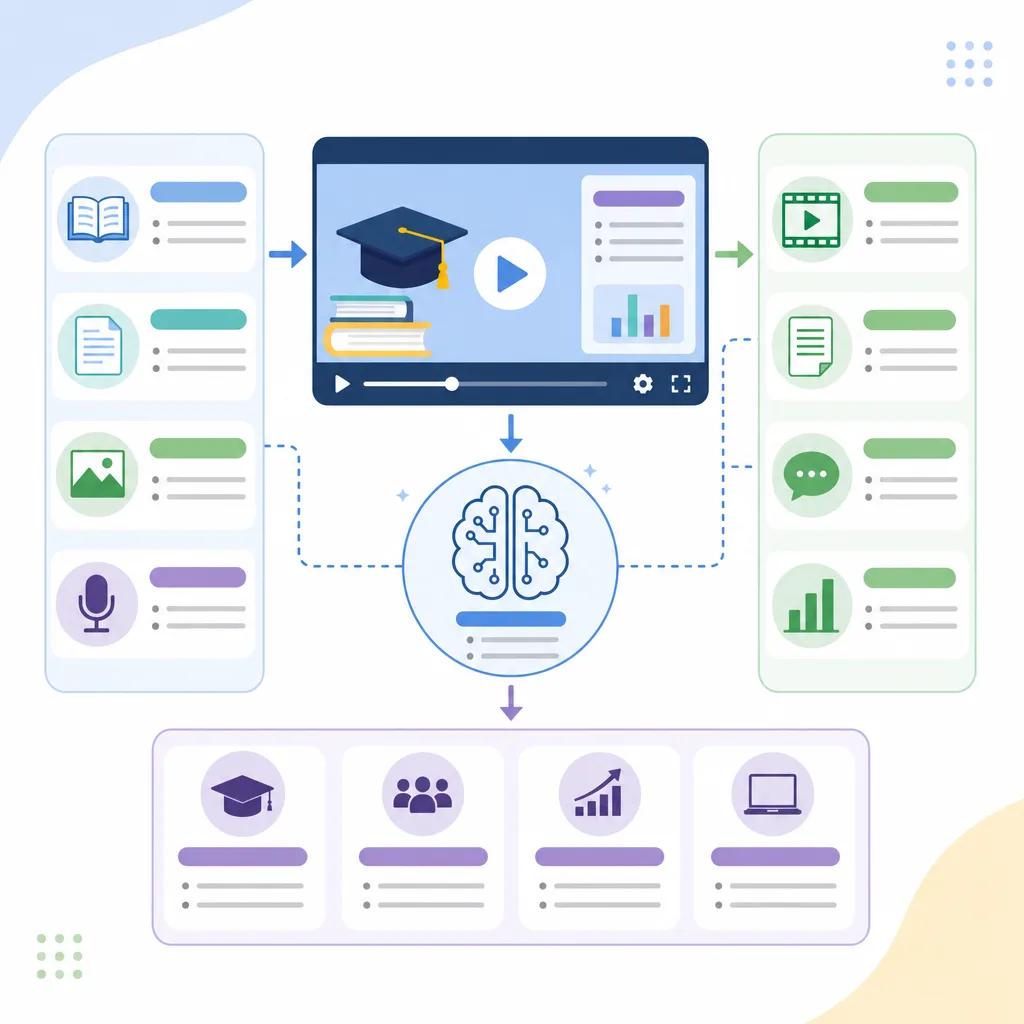
Educational institutions utilizing AI video tools like ", Vexub, " can easily create content that resonates with students. These tools help educators focus more on teaching rather than the technical aspects of content creation.
How to Implement AI Video Content in Your Curriculum
Implementing AI video content in education requires a strategic approach. Begin by identifying the learning objectives and how video content can help achieve them. Consider the type of content that best suits your students, whether it's instructional videos, tutorials, or interactive modules.
Once the objectives are set, explore AI video tools that fit your needs. Platforms like ", Vexub, " offer robust features such as voice cloning, animation, and real-time editing, allowing educators to produce high-quality videos efficiently.
Selecting the Right AI Tools
Choosing the right AI tools is crucial for successful implementation. Factors to consider include ease of use, integration capabilities with existing systems, and the ability to customize content. Tools that offer analytics can provide insights into how students interact with the content, helping educators refine their teaching strategies.
For example, ", Vexub's AI capabilities, " enable educators to create engaging and interactive content that can be easily adjusted based on student feedback and performance data. This adaptability enhances the overall learning experience.
Benefits of AI Video in Educational Settings
AI video content offers multiple benefits in educational settings. It enhances accessibility, allowing students to learn at their own pace and revisit complex topics as needed. This flexibility is particularly beneficial in diverse classrooms where students have varying learning speeds.
Moreover, AI video content can be tailored to cater to different learning styles. Visual learners, for instance, can benefit from videos with rich graphics and animations, while auditory learners might prefer videos with clear, concise narration.

By adopting AI video tools, institutions can also save on production costs and time. AI automates many aspects of video creation, reducing the need for extensive resources and allowing educators to focus on content quality.
Challenges and Considerations
Despite the benefits, there are challenges to consider when integrating AI video content. One significant challenge is the initial cost and learning curve associated with adopting new technology. However, the long-term benefits often outweigh these initial hurdles.
Data privacy and security are also crucial considerations. Institutions must ensure that any AI tools used comply with privacy laws and protect student data. Selecting reputable platforms with strong security measures is essential.
Ensuring Data Security
To address data security, choose AI platforms that offer end-to-end encryption and robust user authentication. Regular audits and updates to security protocols can further protect sensitive educational data. Platforms like ", Vexub, " prioritize security, ensuring that student information remains confidential.
Create videos like this with AI
Script, voiceover, images and subtitles — automated in minutes.
Future Trends in AI Video for Education
Looking ahead, AI video content is set to become even more integral to education. Trends such as virtual reality (VR) and augmented reality (AR) will further enhance interactivity and immersion. These technologies, combined with AI, can create highly engaging learning environments.
Educational institutions should stay informed about these trends and be prepared to adapt. By doing so, they can continue to offer innovative and effective educational experiences that meet the evolving needs of students.
Conclusion
Incorporating ", bold("AI video content"), " into educational settings offers numerous advantages, from increased engagement to more efficient content creation. By leveraging tools like ", Vexub, ", educators can create tailored and interactive learning experiences.
As technology continues to evolve, staying abreast of AI trends and adopting new tools will be essential for educational institutions aiming to provide superior learning environments. Embrace AI video content to enhance your institution's educational offerings and stay ahead in the competitive landscape of 2026.